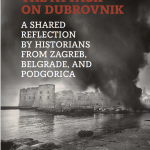
The anti-war book ‘Memories of the War – The Siege of Dubrovnik 1991–1992’ promoted – so that it never happens again
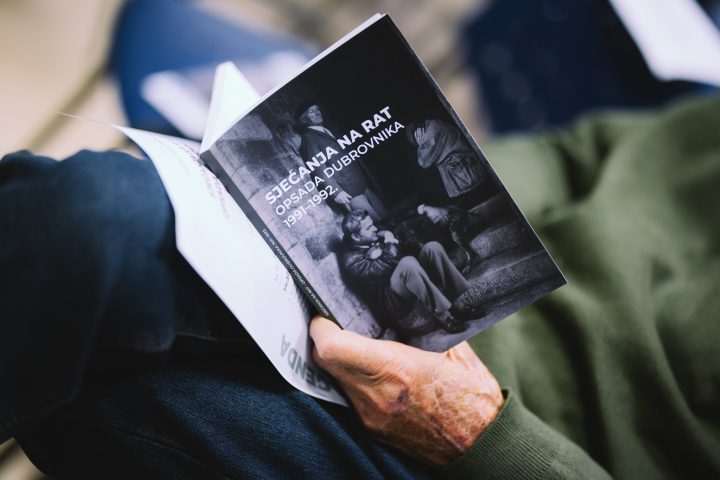
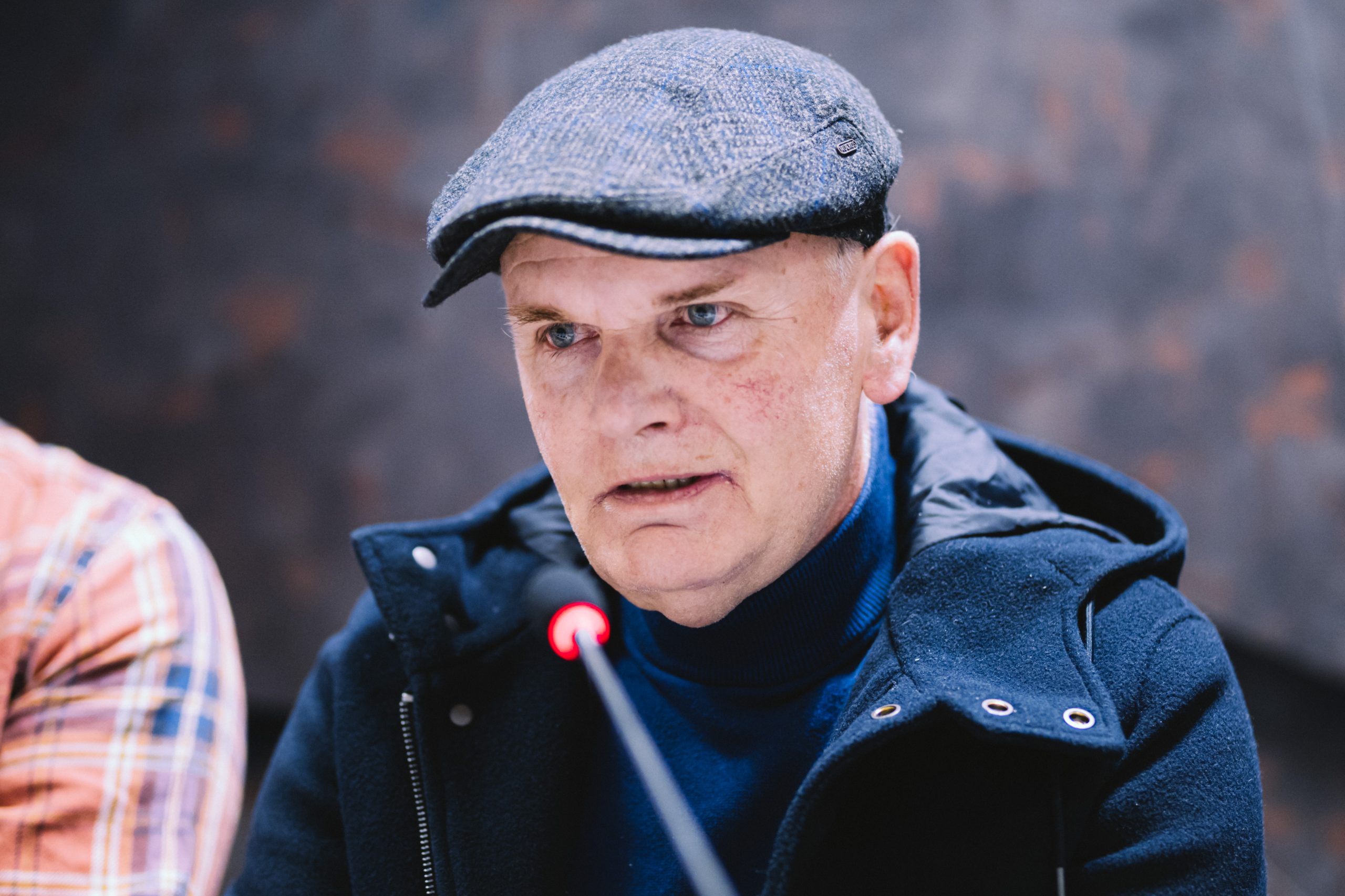
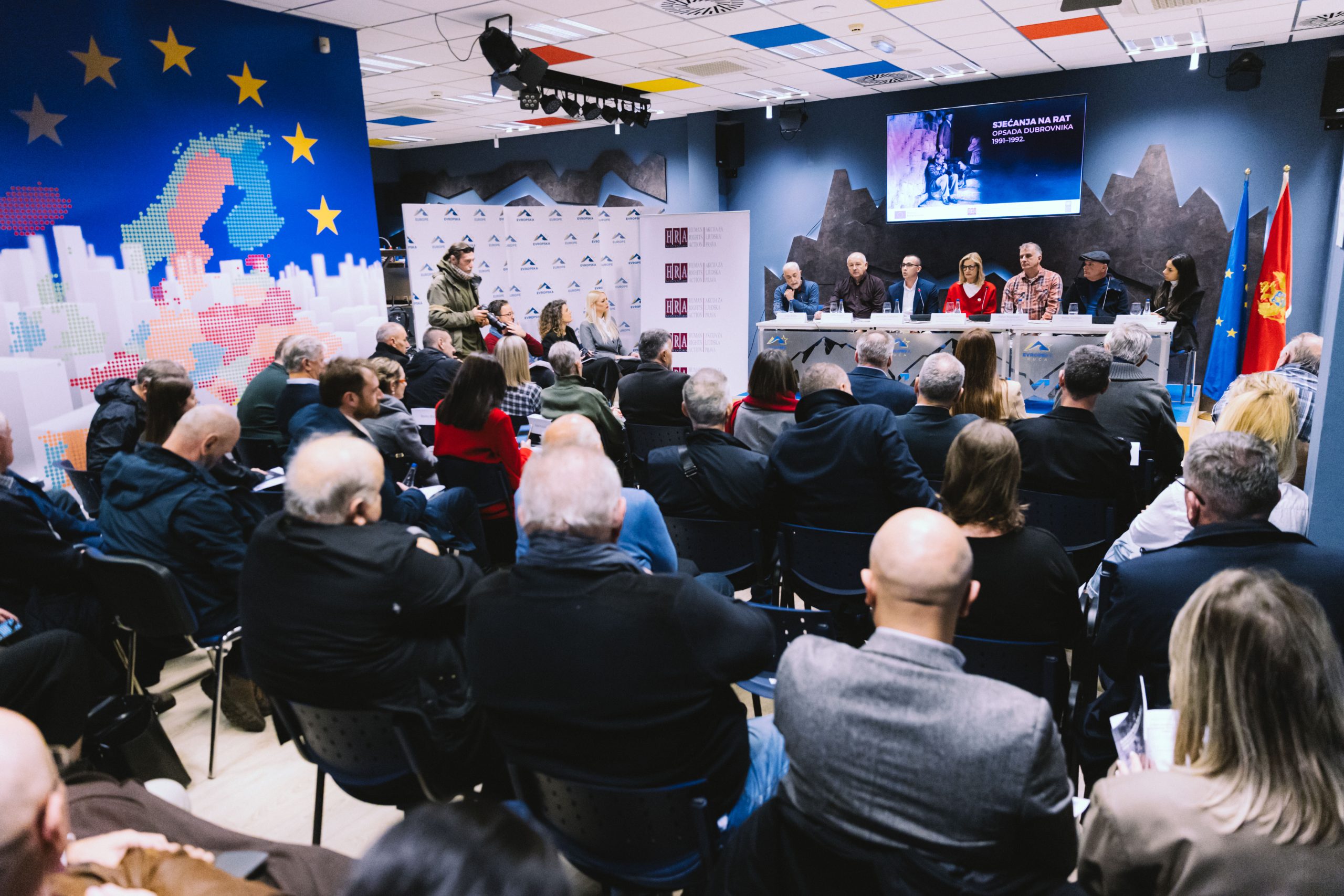
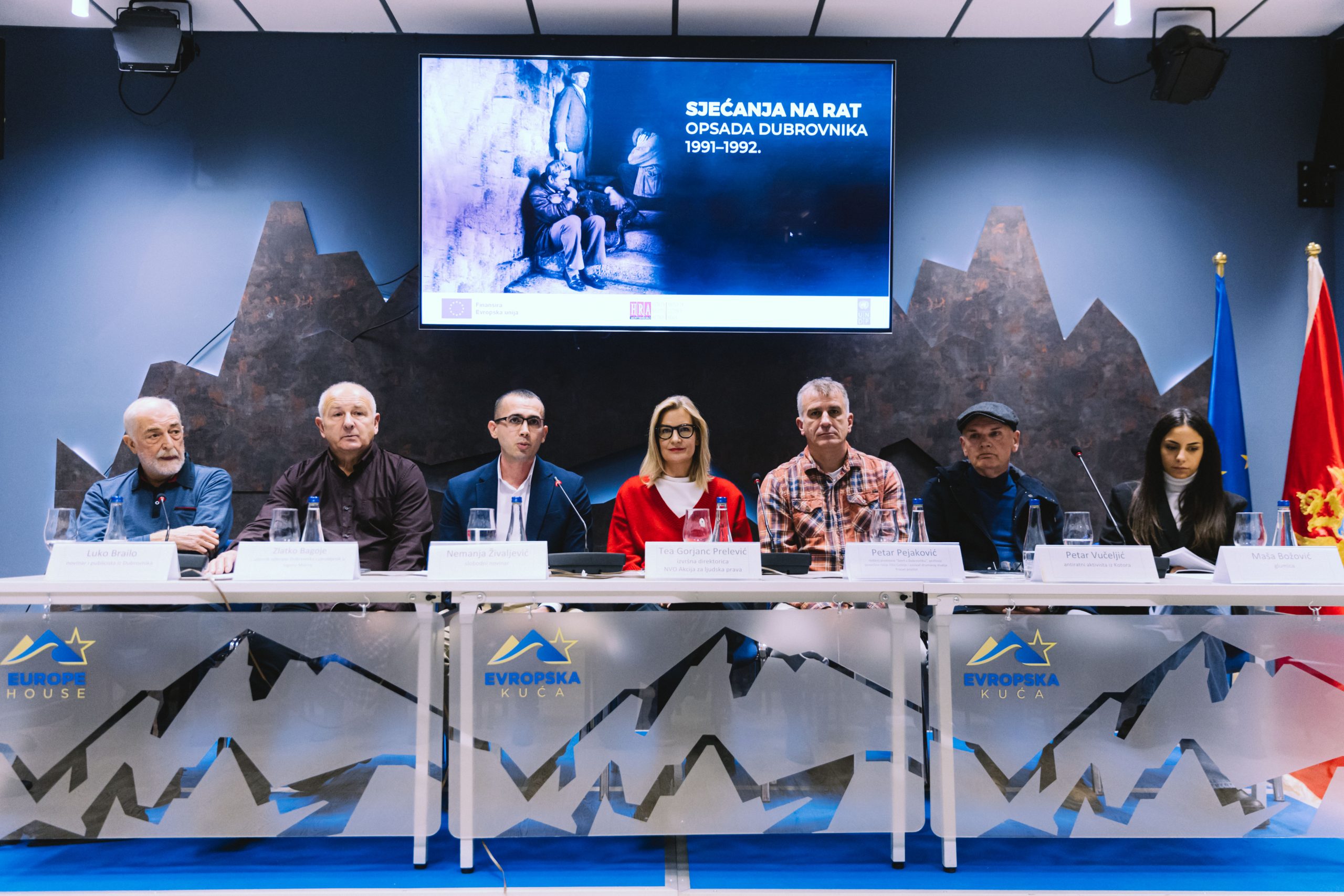
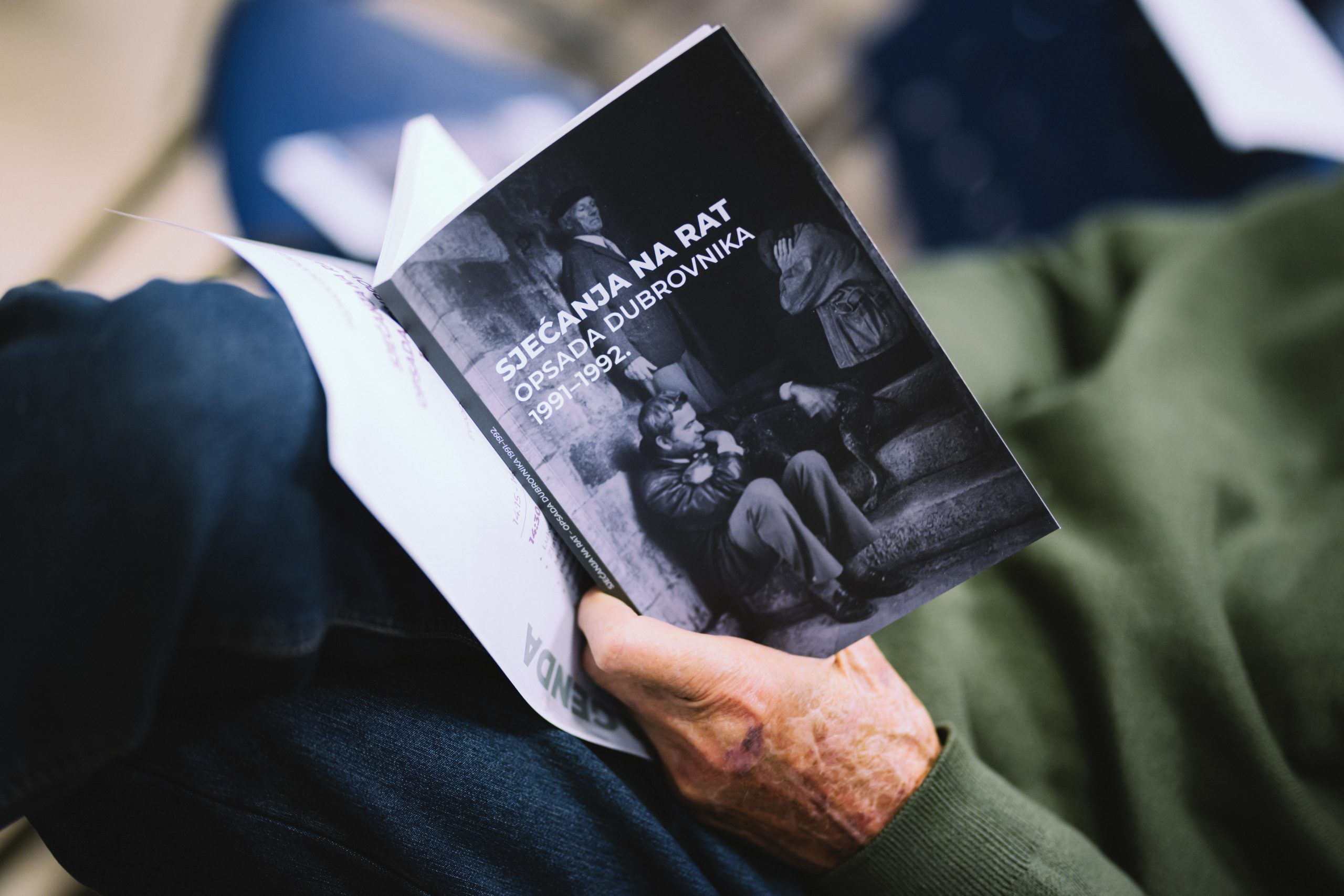
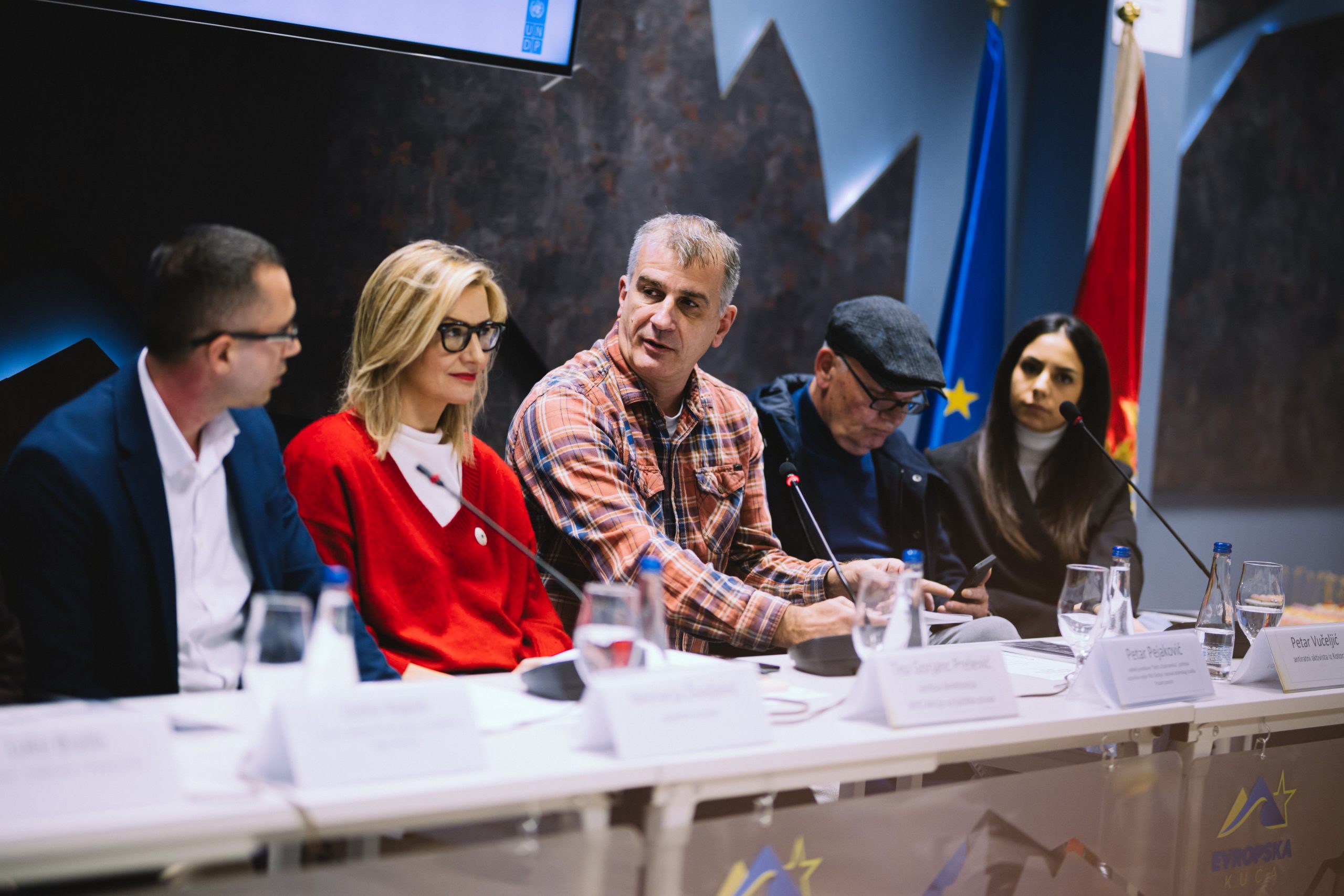
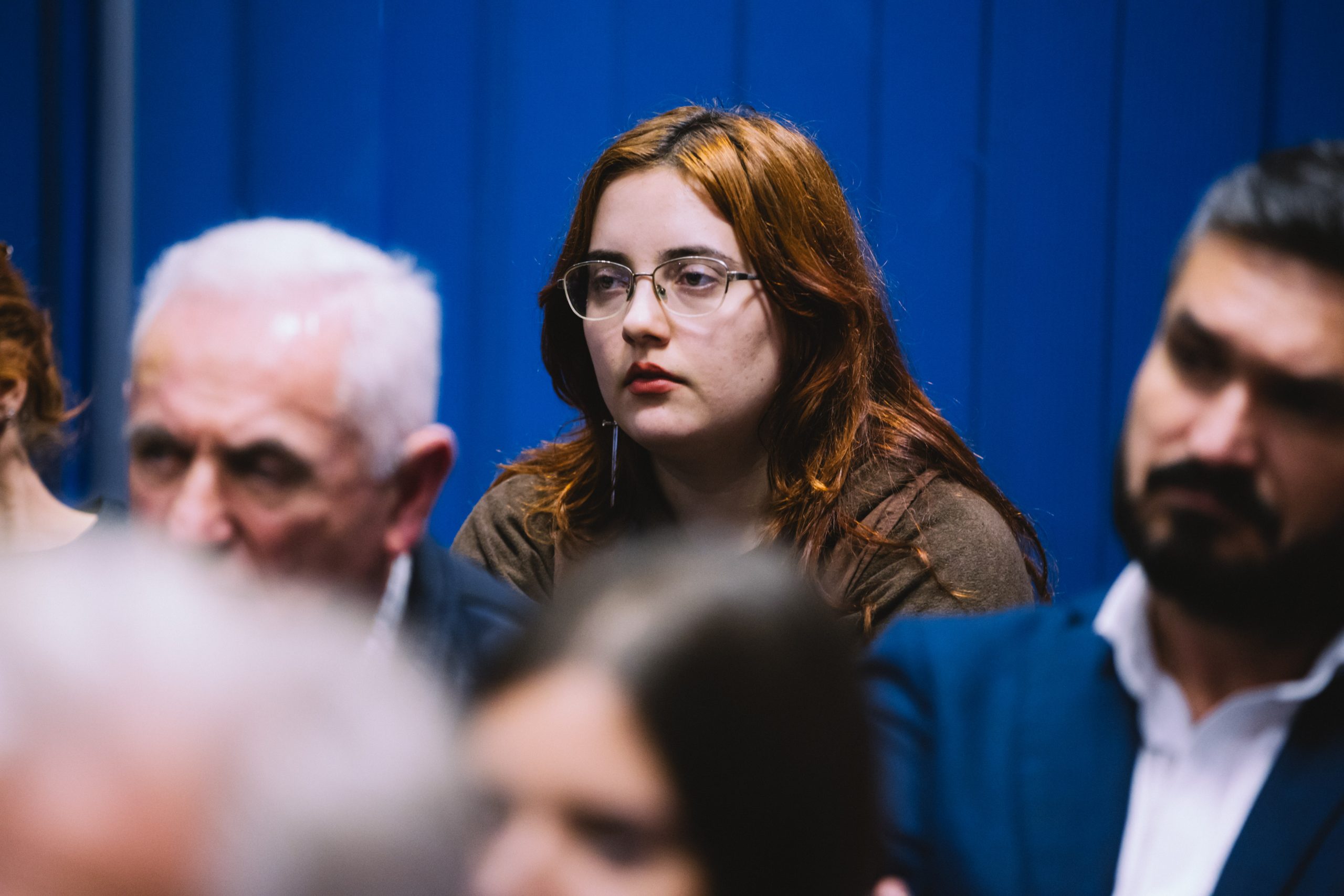
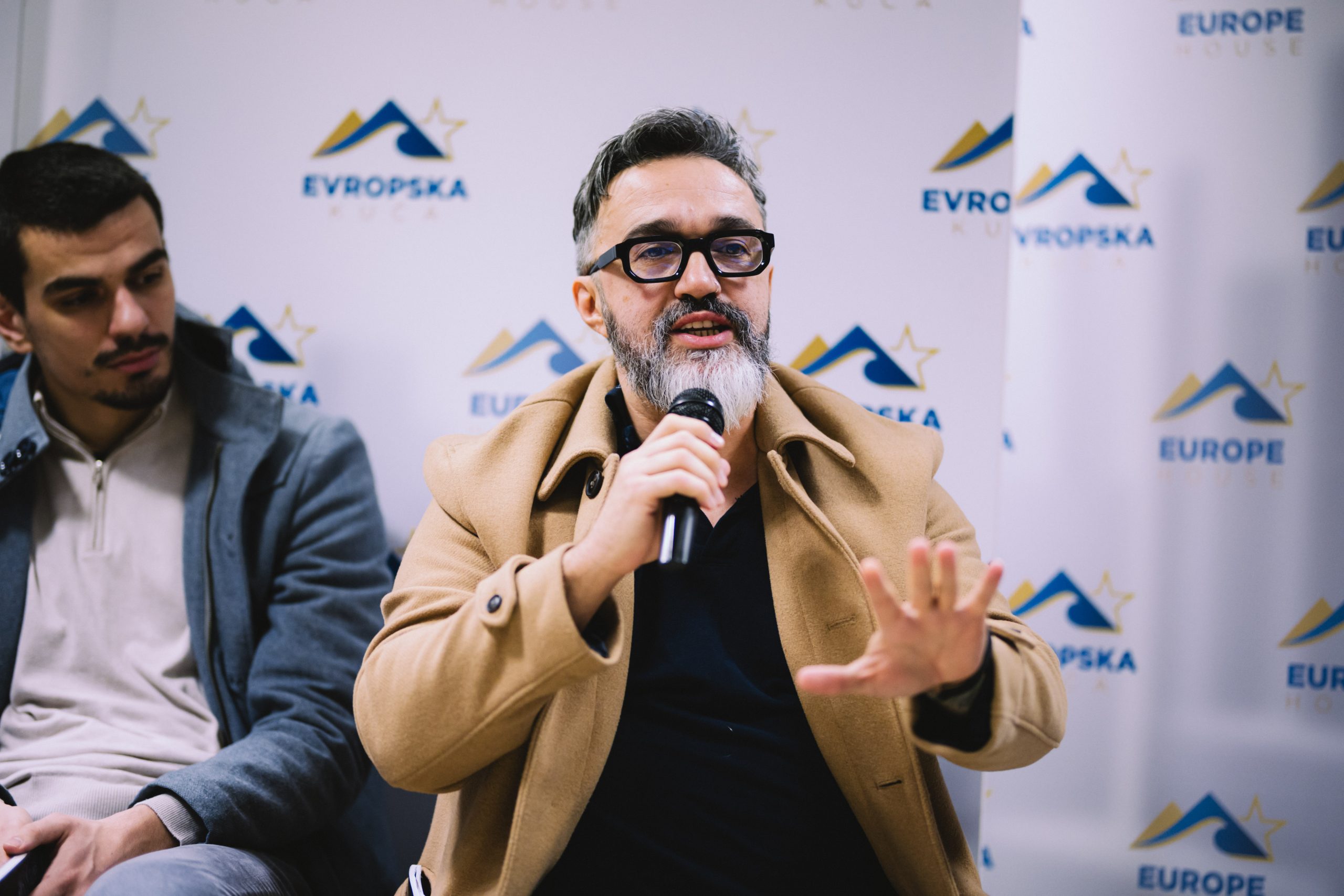
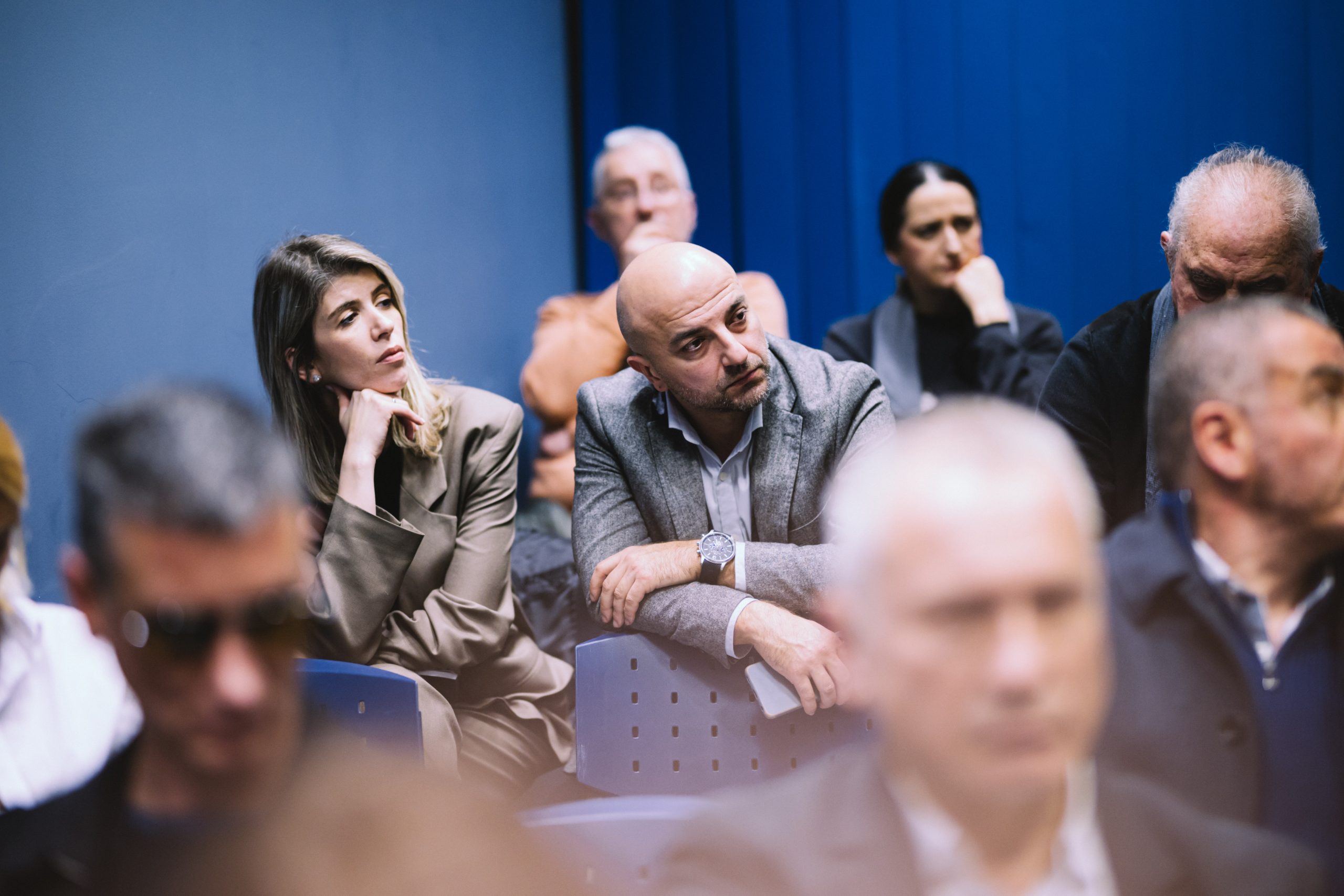
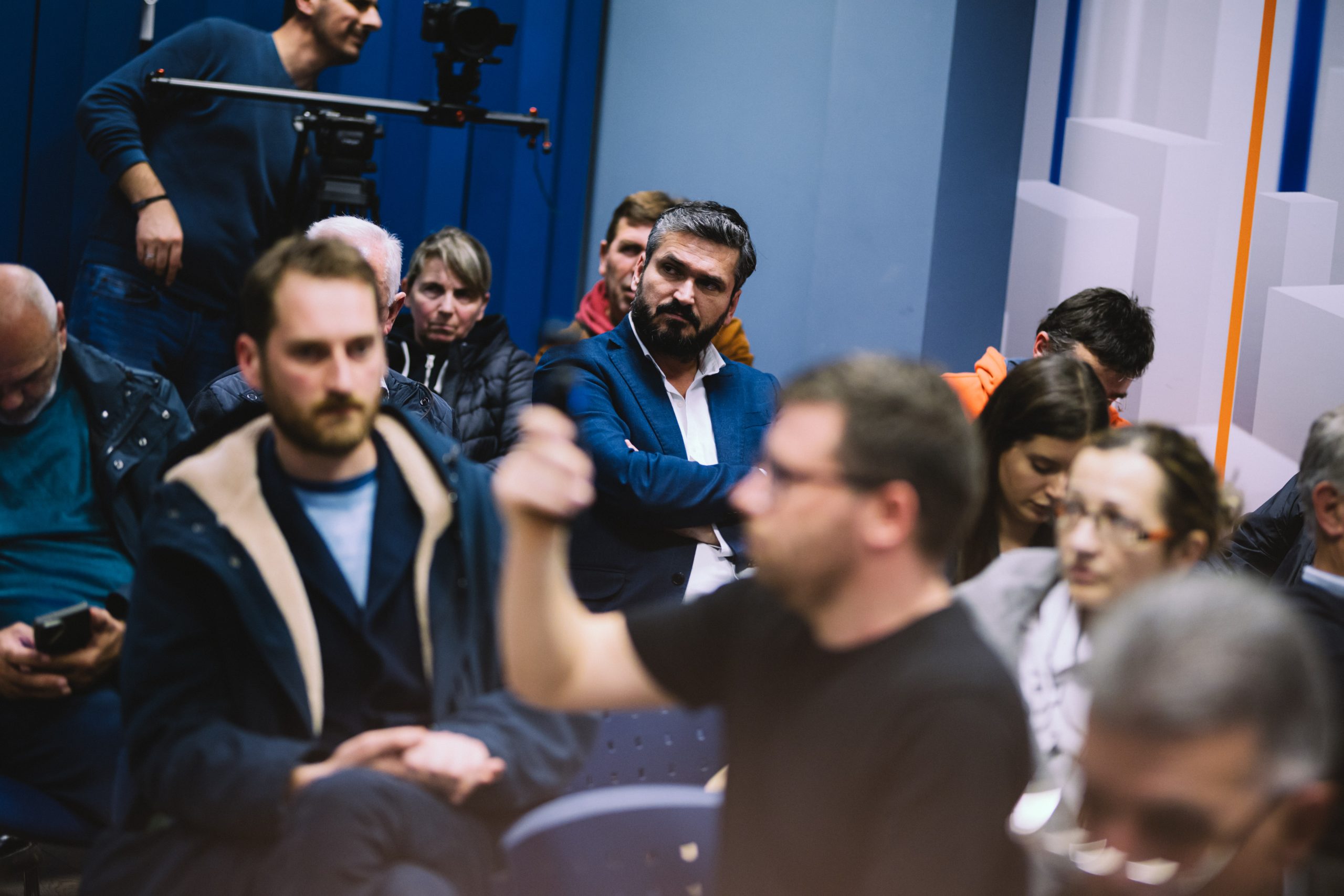
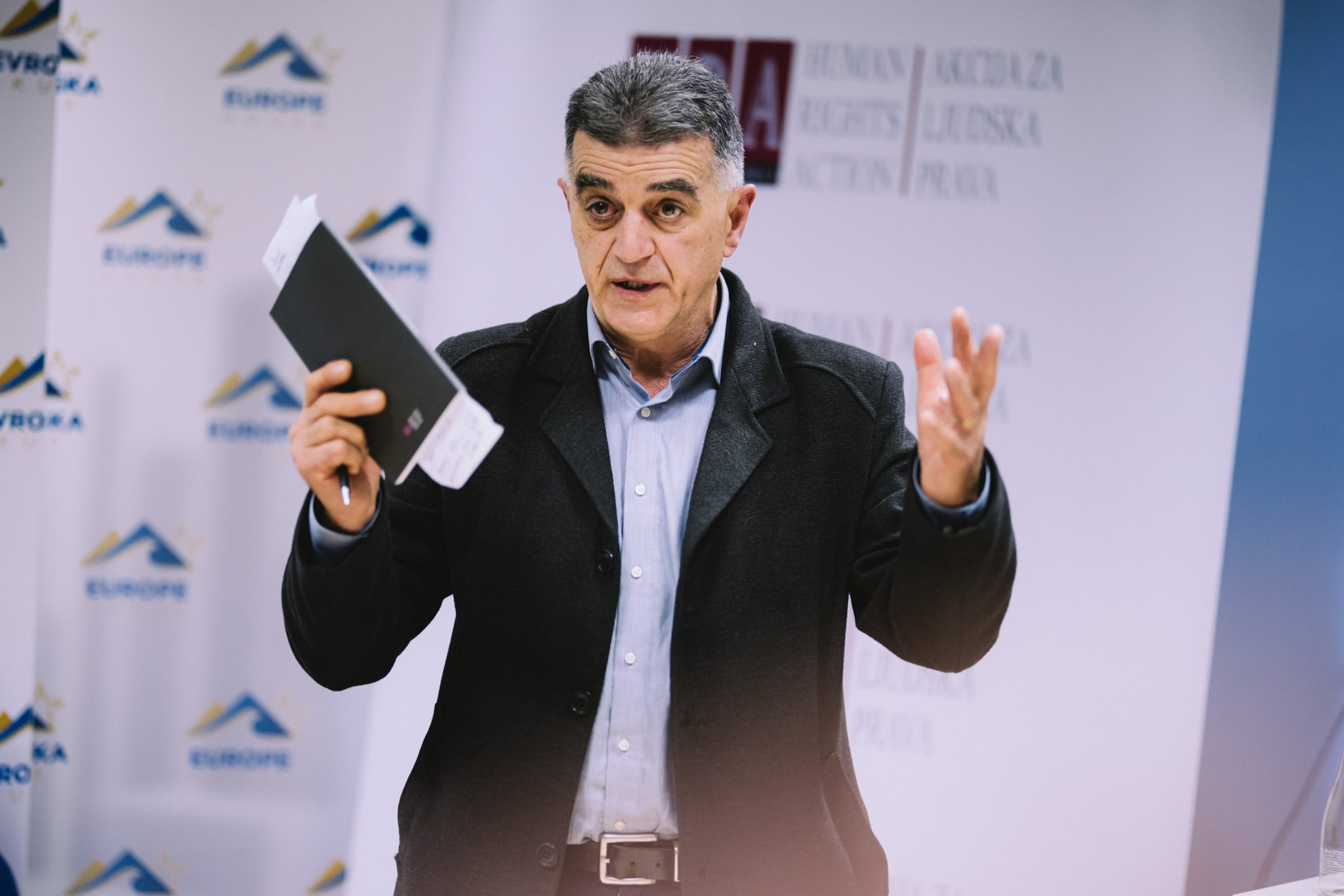
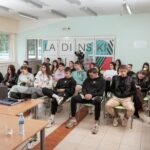
On the eve of the anniversary of the heaviest shelling of Dubrovnik’s Old Town on 6 December 1991, Human Rights Action presented the book “Memories of the War – The Siege of Dubrovnik 1991–1992”, which gathers together the recollections of Montenegrin soldiers who took part in the attack on the Dubrovnik area, as well as the testimonies of victims – the residents and defenders of the city. The promotion was organized at the European House in Podgorica before an audience that included war veterans from both sides, participants in the socio-political life of the time, civil activists, journalists, and students.
The editors of the book are Tea Gorjanc-Prelević, Executive Director of HRA, and Petar Pejaković, theatre director, university professor and founder of the Drama Studio Prazan prostor, who also recorded the testimonies of the war participants.
Gorjanc-Prelević stated that this is an “anti-war book” that shows that in war, everyone loses. She emphasized that all the Montenegrin interviewees conveyed the same message: they would never go to war again.
“We created this book to prevent any future war. We are aware that there are people who would choose war again. Even today we have so-called war entrepreneurs, as we did in the 1990s. We made this book to teach younger generations to resist war propaganda.”
Given the current climate, there is no room for rest, Gorjanc-Prelević warned. This is why it is important to raise voices today, just as young people across Montenegro did in the early 1990s when they joined the anti-war movement.
“Just like they did then, we have the obligation today to react to the same patterns, the same promotion of aggressive nationalism — from Dodik and Vučić to our own Vraneš and Kovačević — who are invoking new wars.”
The Executive Director of HRA insists it is essential for Montenegro to acknowledge and clearly state the role it played in the attack on Dubrovnik, and the fact that it did not prevent the attack even though it could have. This is especially important because, as theatre director Petar Pejaković said, the conflict was senseless and absolutely unnecessary.
“Unfortunately, there have been wars far more horrific than this one between 1991 and 2025, but as for senselessness and pointlessness – I am not sure I have seen anything like it in literature or film, the fields I work in. That sense of absurdity and utter pointlessness stayed with me throughout the making of the performance.”
Pejaković’s play “Death in Dubrovnik”, named best performance at this year’s “Marulić Days” festival in Split, was created based on the testimonies collected and published in the book. He said that those who chose to speak openly about their participation in the campaign against Dubrovnik deserve respect, because that episode of history is still a taboo subject in Montenegro.
“It is extremely important that such voices are heard, and that everyone who is able to resist the negative forces that lead to hatred, intolerance, misunderstanding and, ultimately, destruction, does so.”
Pejaković stressed that it is necessary to fight the culture of forgetting. The book contributes to this, even though listening to stories of what people lived through during the siege of Dubrovnik was difficult.
“After those conversations — and I am someone who usually sleeps without difficulty — I was completely dysfunctional. I can only imagine how it is for those who lived through it or still carry those scars, when we who only listen, decades later, feel so shaken and compelled to ask: why and how did this happen?”
Among those who questioned the attack on Dubrovnik from the very start and said “no” to war was Kotor local Petar Vučeljić, who had to flee Montenegro after returning his rifle.
“That October, when the Montenegrin government told Croatia that Montenegro was not at war, I was standing at Ćilipi with a rifle, alongside my friends. I hear that we’re not at war — and yet I’m there,” Vučeljić said.
He stressed the importance of resisting the propaganda spread by Montenegrin State Television in the 1990s so that such “madness never happens again”.
“It’s very important to understand what propaganda did to the people. It took away all their values. The Montenegrin people became an amorphous mass that is manipulated even today… 35 years later, and the situation has not meaningfully changed. The current moment is absolutely similar to the one back then.”
The importance of propaganda at that time was echoed by Dubrovnik journalist and publicist Luko Brailo, who brought three issues of Pobjeda newspaper from 1991 titled “War for Peace,” which he described as “examples of human dishonor and professional primitiveness”.
“These are examples of falling under influence and crossing that thin line from journalist to propagandist in the worst sense. It’s terrible… And many similar patterns exist today, perhaps not in such a crude form.”
This is why, he argued, a book like “Memories of the War – The Siege of Dubrovnik 1991–1992” is necessary.
“This book shows that there are normal people willing to talk about something terrible. And precisely because it was terrible, we must talk about it. If we hide behind narratives like ‘War for Peace,’ I fear parts of history will repeat themselves.”
Dubrovnik defender and former Morinj camp prisoner Zlatko Bagoje said that the book is, as people in Konavle say, “on the right path.”
“This path leads to reconciliation, peace, forgiveness — to everything good… The book arrived at the right moment, to stop this wrong direction, so that people can start thinking and living normally again.”
How precious a normal life and normal human relations are is testified to precisely by Bagoje. He fondly remembers, from his time as a prisoner in the Morinj camp, the humane actions of guard Mladen Proročić, but he also recalled another moment that restored the prisoners’ faith in life.
“There was another guard who came one morning, after all our suffering, and said, ‘Good morning, people.’ My God, that sentence… It’s incredible how much those words meant to us at that time, because to them we were Ustashas, Zengas, butchers…” Bagoje recalls.
Actress Maša Božović does not remember the 1990s. In the play “Death in Dubrovnik,” she portrays a striking female character who carries an olive branch — a symbol of peace — throughout the performance while confronting the horrors of war. She was born a decade after the siege of Dubrovnik and knew almost nothing about the event before working on the production.
“We didn’t learn about it, we didn’t hear anything about it. Then all that information, throughout the year-long process of working on the play, the testimonies of people who shared their stories with us, deeply affected me and shaped a very different picture — of the country back then, of that brotherhood and unity… Everything was spoken of in the most beautiful narrative passed down to us as we grew up, and I couldn’t understand — how did such a terrible chaos happen in such a wonderful country?”
Božović believes that with the play — which will also be performed at the Montenegrin National Theatre on 29 December — they are doing something good and contributing to the spread of anti-war values in society. But she also reminds that not all doors are open to such work.
“The fact that we cannot perform the play in Nikšić is truly devastating. And not only in Nikšić, but in most towns in Montenegro. It is clear how things stand — who our mayors and theatre directors are, and what narrative is being presented to young people as dominant.”
This is why, she believes, everyone must do what they can within their own professions to combat negative narratives.
“If every profession fought from its own position, we could achieve something. Politicians, the media, artists, professors… Then all of us could influence reality. We know the mechanisms and tools used in theatre and dramatic arts. That is the most we can do. I hope that with this play we manage to reach people so that they leave the theatre at least a gram less fascist,” the young actress said.
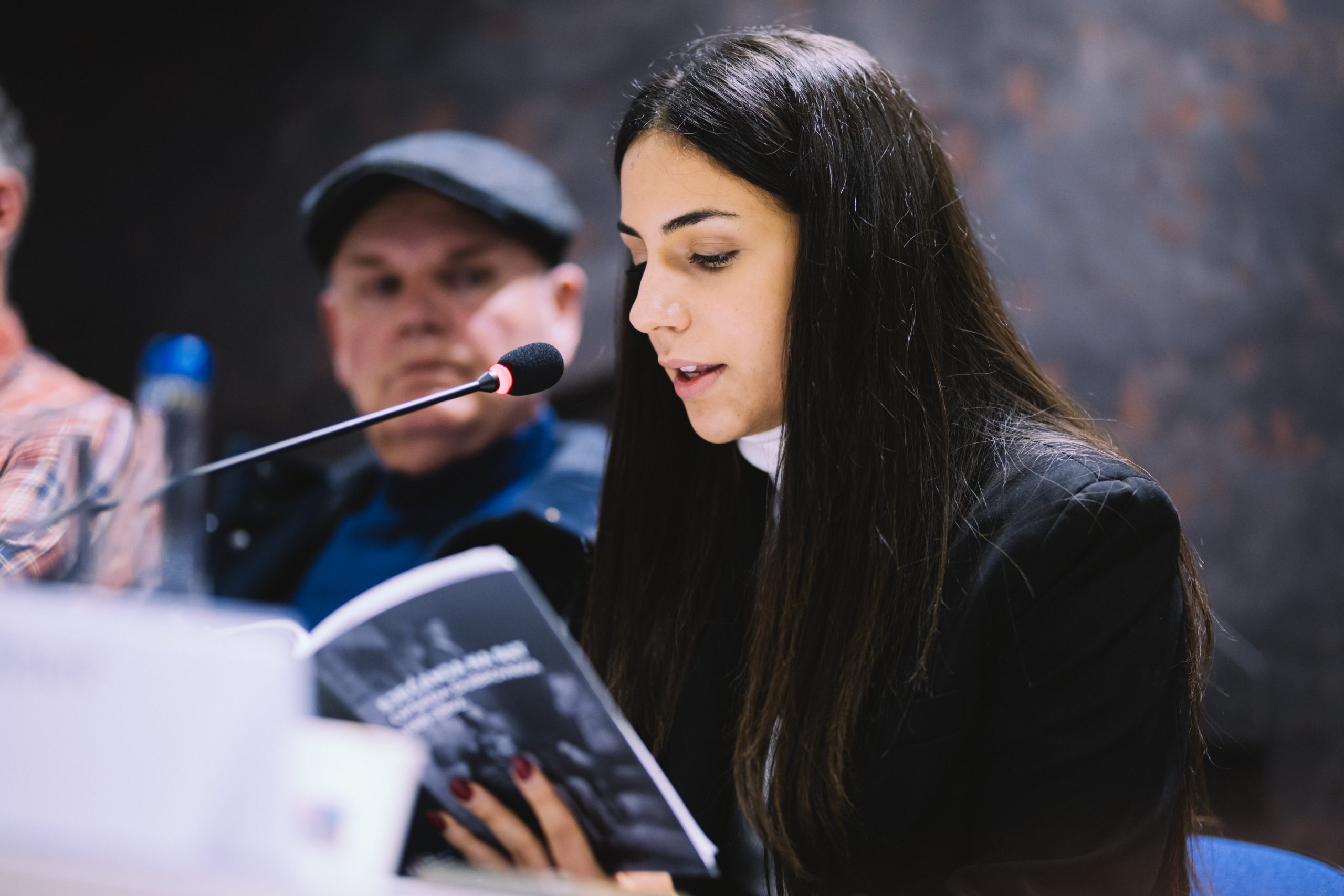
Božović then read excerpts from the War Diary of Pavo Urban, a young Dubrovnik photographer who was killed at the age of 23 on 6 December 1991 while photographing the shelling of his hometown. What Pavo wrote in his diary during the siege, along with his last 12 photographs, is published in the book “Memories of the War — The Siege of Dubrovnik 1991–1992.”
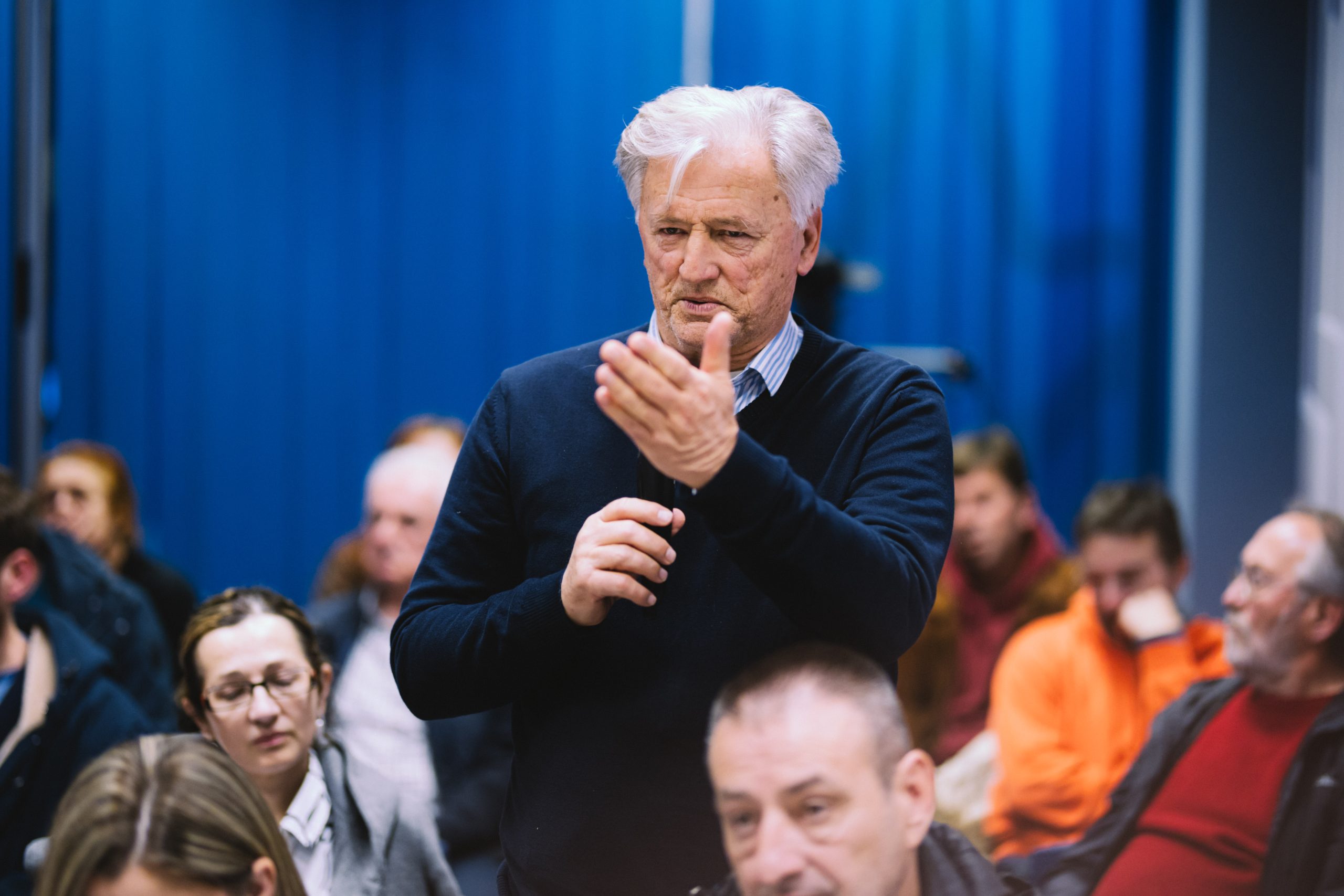
The audience members then shared views on the 1990s and on current developments in Montenegro.
Law professor Nebojša Vučinić expressed fear that what happened in and around Dubrovnik might be “child’s play” compared to what could happen in the future, given today’s destructive politics.
“All respect for the book and the testimonies, but I think that the other side has created a propaganda construct that is becoming more and more activated every day — that Yugoslavia was being defended, which is utterly nonsensical. But look, that propaganda works. I think the two Hague Tribunal judgments are not being used enough — the judgment against Strugar and the judgment against Jokić, which mention a joint criminal enterprise… This is written in many judgments, but these two are especially relevant for us in dismantling this propaganda construct,” Vučinić emphasized.
Former anti-war leader and Montenegrin official Žarko Rakčević recalled how difficult it was to be on the other side 34 years ago.
“Clerofascism was marching then, and it was hard to be in the minority. It was difficult to be a decent human being in the early 1990s. It was difficult to be a Montenegrin, to be a peacemaker, to be against the war. Those were honorable liberals, the SDP, Monitor, many ordinary people — but still, a fierce minority. Opponents of that war, of that madness, when we were told that 30,000 Ustashas were attacking Montenegro — which was horrific propaganda,” Rakčević recalls.
He warned that Montenegro has still not broken away from such narratives:
“Back then we were told that 30,000 Ustashas were attacking Montenegro. Today we are told that 100,000 Turks are threatening us.”
Activist Dejan Mijović said that today, in the Montenegrin government, we have young people who had no way of learning what happened in the 1990s or what Montenegro’s role was in the attack on Dubrovnik.
“Now the people dominating the government are those who were back then very active and enthusiastic — even participants in those war campaigns. That is not surprising. In textbooks and in the education system, nothing about this is taught.”
Historian Šerbo Rastoder confirms that it is not possible to learn about the campaign against Dubrovnik in school because the Montenegrin authorities demanded that textbooks present it differently.
“I am the reason why there are no lessons about the war in school textbooks. Why? Because my textbook, which I co-authored, was banned. All of Montenegro stayed silent about it. At the time, the head of the commission was Radovan Damjanović… I remember that the condition for approving the textbook was that I change the statement that Montenegro had been at war. I said, ‘People, is this normal?’ So I was officially asked to say that Montenegro was not at war — while I myself was fleeing the army to avoid going to Dubrovnik.”
Rastoder believes that two high-ranking officers of the Yugoslav People’s Army — Krsto Đurović and Vladimir Barović, who opposed the attack on Croatia and died under unclear circumstances at the beginning of the war — should hold a special place of honor in Montenegro today.
“The people whom all of Montenegro should celebrate are Krsto Đurović and Vladimir Barović…” he said.
Activist Darko Ivanović, speaking about the messages displayed by Montenegro’s football fans during two matches against the Croatian national team, said that they wanted to show that the “real Montenegro” is still alive and that “no one can extinguish it,” even though many labelled them traitors after they apologized for the attack on Dubrovnik.
He also recalled what life looked like in his neighborhood in the days when the attack on the Dubrovnik area began:
“When I was 12 years old, I would walk out of the apartment block where I lived, and there were trucks full of stolen appliances from Konavle and Dubrovnik homes. That’s how I woke up and how I went to school. Another memory is that on my way to school, I constantly came across people who openly approved of everything that was happening. We had a small circle at home where we thought we were the crazy ones, because everyone else thought differently.”
Marko Ugrin, from the Croatian National Council, spoke about the “shameful decision” of the Kotor authorities to name the swimming pool in Škaljari after Zoran Gopčević, whose role in the Morinj camp, where he was engaged, is disputed. He also sent a message to Darko Ivanović regarding the attitude of Montenegrin fans toward the attack on Dubrovnik and the offensive response from Croatian fans.
“That banner rejecting forgiveness, I believe, does not represent the view of the majority in Croatia, and I think the only people qualified to speak about this are those who lived through it,” he said.
The one who did live through the horrors of war, Zlatko Bagoje, had a message regarding the actions of his compatriots. He called them disgraceful.
“I get angry, for example, about some of the poisonous arrows coming from the Montenegrin side, especially lately. But what our people did — that truly shames me. That affects me much more… What did the banner say? ‘No forgiveness…’ Horrible, horrible, truly! Who wrote that? Who are you to say such a thing?!” he asked, visibly upset.
The discussion then included those who 34 years ago were in the military ranks heading toward Dubrovnik.
Radomir Goranović, a former KOS officer of the JNA who also served as an interrogator in the Morinj camp and whose testimony appears in the book, claims that none of what the authorities spread before the attack on Dubrovnik was true.
“The villains who lied to Montenegro and pushed its children into bloodshed — who received national pensions, who still hold influential positions in Montenegro, who claimed that 30,000 Ustashas were marching on Montenegro. It was all a lie!”
At the time of the attack on the Dubrovnik region, Rade Radoman was a JNA battalion commander. He says he opposed mobilization from the very first day and, together with like-minded officers, appealed to the state and military leadership.
“We asked where we were going and whom we were fighting. We also asked who had ordered the war mobilization, because it was not the Presidency. Did the JNA carry out a coup and take the fate of the country into its own hands? There was no answer,” Radoman recalls.
He pointed to family tragedies that followed when sons refused to go to war:
“A father wanted to kill his son because the boy threw down his rifle. He didn’t want to go to war… The father wanted to shoot him, and the mother and sister jumped in front of the gun. For two months, the two of them took turns sleeping on the threshold of his room so the father wouldn’t kill him for ‘disgracing’ the family and throwing away the weapon. That young man became gravely ill from stress, from suffering, and sadly, he died. There are many similar cases,” Radoman warned.
Zoran Kapisoda, whose testimony is also recorded in the book, explained that the reservists sent to Dubrovnik had very little choice.
“We had to choose whether we would go before the Military Court, to prison, or go to Grab. We were told we were going to Grab, to stand there and guard Montenegro’s border.”
Nevertheless, Kapisoda was sent to the Dubrovnik battlefield. He claims that his military booklet states that he was on a military exercise, not that he took part in a war. He also offered an apology to the guests from Dubrovnik:
“Forgive me for being misled. I had no choice, and I feel even now that I have no choice,” Kapisoda said.
We remind that the siege of Dubrovnik by the JNA lasted 240 days, during which 116 civilians, 194 Croatian defenders, and 165 JNA members were killed. On 6 December 1991 alone — the deadliest day in Dubrovnik’s history, according to city chroniclers — 19 people were killed and 60 wounded. More than 600 shells of the Yugoslav People’s Army were fired at Dubrovnik’s Old Town that day.
During the campaign in the Dubrovnik area, 33,000 people were displaced — two-thirds of the region’s population — and 443 individuals were imprisoned in JNA camps in Bileća and Morinj. More than two thousand buildings in the wider Dubrovnik region were destroyed, and private and public property was damaged and systematically looted.
For crimes committed against prisoners in the Morinj camp, Montenegrin courts convicted four JNA members: Ivo Gojnić, guard commander; Špiro Lučić, guard; Boro Gligić, guard and Ivo Menzalin, cook. The Hague Tribunal convicted General Pavle Strugar and Admiral Miodrag Jokić for the shelling of Dubrovnik on 6 December 1991.
The book “Memories of the War – The Siege of Dubrovnik 1991–1992” is availablehere.
The presentation of the publication was organized within the project “Siege of Dubrovnik 1991–1992: Memories of War So That Evil Does Not Repeat”, jointly implemented by Human Rights Action and the NGO Prazan prostor, with the support of the European Union through the regional project “EU Support to Confidence Building in the Western Balkans,” implemented by the United Nations Development Programme (UNDP).
Below you can read reports from the promotion published by media outlets:
Vijesti:“Gorjanc Prelević: Montenegro took part in the war; it was an illusion that Yugoslavia was being defended somewhere out there”, by Biljana Nikolić;
Pobjeda: “The promotion of the book ‘Memories of the War – The Siege of Dubrovnik’ opened space for testimonies by veterans, prisoners, and journalists about Montenegro’s role and propaganda: Voices that break the silence”, by Jelena Martinović;
PCNEN: “The book ‘Memories of the War – The Siege of Dubrovnik 1991–1992’ promoted.”
Vijesti: “Montenegro’s shame with crumbs of honor: The anti-war book ‘Memories of the War – The Siege of Dubrovnik 1991–1992’”, by Biljana Nikolić, available here.



























 English