HRA on the Attack on Dubrovnik in 1991 – Those Who Tarnished Montenegro’s Reputation Must Be Prosecuted
“We trampled on everything that was sacred to the Montenegrin soldier in 1991 on the Dubrovnik battlefield”, said Rade Radoman, former commander of the Third Battalion of the Tenth Montenegrin Brigade, during the second “Coffee with Remembrance” event, organized by the NGO Human Rights Action in Bar on 20 March. Radoman said that Montenegro disgraced itself during the attack on Dubrovnik and that, as a lesson for future generations, all those who committed atrocities should be prosecuted.
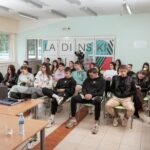
Following the meeting with young people in Podgorica, this event in Bar also focused on Montenegro’s role in the JNA attack on Dubrovnik in 1991 in neighbouring Croatia.
Rade Radoman, a native of Bar who was responsible for 700 to 920 soldiers during his time on the battlefield, said that “from the very first day of mobilization, soldiers were asking numerous questions”, but there were no answers.
According to him, in June 1991, the then President of the Republic of Montenegro and the commander of the corps were unable to answer officers’ and soldiers’ questions about who they were going to war against, who had declared a state of war, and who had ordered the mobilization: “Under the Constitution of the SFRY, only its Presidency could have done that, and it did not — that was clear.”
He says he personally witnessed individuals looting, burning and destroying the property of innocent civilians in the Dubrovnik area.
“That army was not prepared for war. Some individuals were prepared for looting and other dishonourable acts, but not for war. Unfortunately, the stain falls on the entire Montenegrin army that was engaged there, although those dishonourable acts were committed by a minority, 2–3 percent of the soldiers, while the army leadership had no will to suppress them”, he said.
“I can say that Montenegrins fought wars throughout history, but such crimes and disgraceful acts had never happened as they did on the Dubrovnik battlefield”, Radoman stressed bitterly.
Let us recall that during the nine-month siege, 33,000 people were expelled from the wider Dubrovnik area and more than 2,000 residential buildings were destroyed. 116 civilians were killed, along with 94 Croatian combatants and 165 JNA members from Montenegro (according to the organization Documenta).
The Perpetrators of Atrocities Must Be Prosecuted
Tea Gorjanc-Prelević, Executive Director of Human Rights Action, recalled that only two Yugoslav People’s Army generals were convicted by the Hague Tribunal for war crimes committed on the Dubrovnik battlefield.
“It was left to us to prosecute the others. However, the Montenegrin prosecution has not prosecuted a single case to this day. Only the two highest-ranking generals, Pavle Strugar and Miodrag Jokić, were convicted by the International Tribunal, and even they were convicted only for the shelling of Dubrovnik’s Old Town. No one has been held accountable for the mass looting and destruction of property, which is also a war crime, nor for the killings of many civilians”, Gorjanc-Prelević warned.
Radoman points out that during the attack on Dubrovnik, a certain number of JNA soldiers from his battalion were arrested.
“The wartime military courts and military prosecution were obliged to initiate proceedings for the offences committed, but as far as I know, none of them were held accountable. Instead, political pressure from the civilian authorities and military leadership contributed to them being returned to their units after a few days, at most a week”, Radoman claims.
To ensure that something similar never happens again, he believes it is necessary to prosecute everyone who committed wrongdoing.
“I believe that all those who behaved dishonourably should carry the stigma of that time. They must be prosecuted so that this never happens again. So that everyone learns that they cannot do whatever they want”, Radoman said.
The Key Role of the Media in Preparing for War
The high school students who attended the event said they had known nothing about the 1991 attack on Dubrovnik and the war in Croatia. What they had heard from their parents or elders about the former Yugoslavia had mostly been positive stories.
“I have a positive view of Yugoslavia because older people always spoke nostalgically about that time”, one participant said.
Historian Miloš Vukanović explained that the attack on Dubrovnik had been preceded by serious preparation in which propaganda played the central role, adding that the media — which at the beginning of the last decade of the twentieth century operated under state control — had a leading role in that process.
“These were trusted media outlets — the state newspaper Pobjeda, state Television, and Radio Titograd. Imagine that for 45 years you watched, listened to, and read those media and believed them. Suddenly, all those media which two years earlier had been talking about brotherhood and unity, about love, cooperation, and about going to the seaside in Croatia and the mountains in Slovenia, within a year started saying first that the Slovenes were traitors and enemies, before that it had been the Albanians, and then they began saying that the Croats were the enemies. These were tectonic shocks for a society that was slowly descending into radicalization,” Vukanović explained.
It was recalled that on its 80th anniversary in 2024, more than three decades after the start of the war in the former Yugoslavia, Radio Television of Montenegro acknowledged mistakes in its reporting and accepted responsibility for spreading disinformation.
How important the role of journalists in the state media was in fuelling the conflict in 1991 was also discussed by Cerović and Radoman.
“Journalists may even have been more responsible than soldiers for what happened. They were given instructions on what they should say — not what was actually happening, but what they should say. And that came from someone in power who was making the war, who was the strategist behind it”, Cerović said.
“In my opinion, the state media contributed greatly to everything that happened later. They were all reporting that 30,000 to 50,000 Ustaše were ready to cross the border into Montenegro, conquer us, and separate Boka… A war psychosis was being created and at that moment everyone was confused,” Radoman recalled.
The high school students present were interested in how many of their fellow citizens had responded to mobilization.
“Is there any archival record listing the names of all the people from Bar who were mobilized?” one participant asked.
The former JNA commander replied that he assumed such records should be kept in the military archive.
He also recalled that in 1991 the actual situation on the ground was completely different from the one described in the media. There was no sign of the so-called Ustaše, while only a small number of Croats remained to defend their homes.
“For all the time I spent on the battlefield, I was never in a position to see a formation larger than a company (80–100 soldiers). Altogether, based on information I learned later, there were no more than three and a half thousand Croats, lightly armed, on the Dubrovnik-Herzegovina battlefield. Mostly groups of 10 to 15 people in crisis headquarters in villages, while on our side the Titograd Corps was engaged,” Radoman said.
But the media were not the only ones contributing to rising tensions. Religious communities, which throughout history had sometimes calmed conflicts and sometimes fuelled them, played a similar role in the 1990s. It should, however, be noted that not all of their representatives contributed to war-mongering propaganda, but because of those who did, Cerović said:
“You may still tell the media — you are lying, but if you are a believer, how are you going to tell a priest — you are lying? And yet he is. He is carrying out organized ideological propaganda whose aim is not to convince you of something, but to prepare you for bloodshed.”
Literature teacher Marija Šušter pointed out that, on the other hand, there were brave people in Montenegro during the 1990s who clearly and loudly said no to war.
“In 1991, people in Cetinje organized themselves spontaneously, because they had a personal, human need to gather in the square and speak out against the war in Dubrovnik. That preserved our honour, and it should be talked about, because those were brave and wise people who recognized the propaganda,” the teacher said.
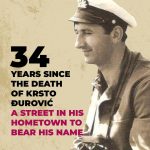
It was emphasized that even in the hardest times there were people who chose solidarity, reason, principle, and peace, as did Rear Admiral Krsto Đurović of the Yugoslav People’s Army — the man who promised that there would be no bombing of Dubrovnik while he was there. Tragically, he died under unresolved circumstances in a helicopter crash on 5 October 1991 near Ćilipi.
The Duty to See Through Lies in Time
“In the 1990s, the strategists of war achieved exactly what they ultimately wanted. They played on people’s emotions. If it does not touch your emotions, the strategy fails. There has to be a reaction, you have to feel the news, you have to feel the desire to protect something that is yours,” Cerović said.
“That reminds me of the film Dara of Jasenovac,” one participant remarked.
Cerović also drew a parallel with current events.
“At this very moment, we have a large organized communication machine trying to explain that history is different from what you have heard. That people who were the most direct collaborators of the Germans and Italians in the Second World War were in fact victims and deserve monuments,” he said.
“The goal is somehow to convince people that they need to defend themselves. You will rarely convince anyone to go out and conquer. But if you convince them that in the place where they are supposed to conquer, they are actually defending themselves… That is still happening in wars around the world today, and this tactic must be recognized in time,” warned HRA’s Executive Director.
She added that a similar narrative had been witnessed a few months earlier, when a campaign was launched against foreign nationals in Montenegro because they were wrongly accused in public of attempted murder.
“In the end, no Turk was officially charged with the attack in Podgorica. One falsehood triggered that entire outpouring of hatred against Turks,” said Gorjanc-Prelević, warning:
“Beware of manipulators who at any moment suggest that you should hate any nation. That is wrong, irrational, and malicious.”
The aim of the “Coffee with Remembrance” event is to raise young people’s awareness of the war events of the 1990s, about which, unfortunately, they have no opportunity to learn through formal education. Through open, fact-based dialogue with war participants, a historian, and a psychologist, young people are brought closer to what happened in our region and why confronting the wartime past is necessary. Remembering the responsibility of individuals for crimes committed, but also the bright examples of resistance to propaganda and of humanity in wartime, is important not only for justice, but also for building lasting peace with neighbouring Croatia.
Through the examples presented, young people should learn how to resist nationalism and war propaganda, which are becoming increasingly present in our region, and how to build a society based on trust, responsibility, and mutual respect.
The “Coffee with Remembrance” activity was organized as part of the project “Together Towards Lasting Peace Through Education, Dialogue and Memorialization”, implemented by Human Rights Action. The project is carried out with the support of the regional initiative “EU Support to Confidence Building in the Western Balkans” financed by the European Union and implemented by the United Nations Development Programme (UNDP). The views expressed during the event belong to the authors and speakers and do not necessarily reflect the views of the European Union or UNDP, nor can they be considered their official positions.




 English