STUDY VISIT TO SARAJEVO FOR THE IMPROVEMENT OF WAR CRIMES PROSECUTION AND STRENGTHENING VICTIM PROTECTION IN MONTENEGRO
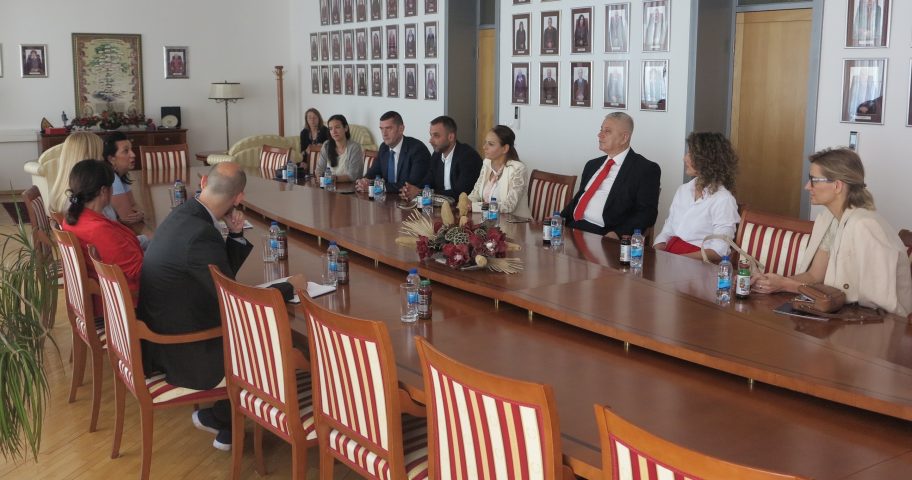
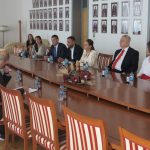
Sudije Višeg suda u Podgorici i predstavnice HRA na sastanku sa v.d. predsjednice Suda BiH, Minkom Kreho, registrarkom Suda Emirom Hodžić i pravnim savjetnikom Srđanom Markovićem
President of the High Court in Podgorica, Zoran Radović, and judges Igor Đuričković, Vesna Kovačević, and Jovan Jovanović visited Sarajevo as part of a study visit organized to improve war crimes prosecution and strengthen victim protection in Montenegro.
The visit was organized by TRIAL International – Office in Bosnia and Herzegovina, in cooperation with Human Rights Action (HRA), through the workshop titled “Exchange of Experiences and Knowledge between the Judiciary of Bosnia and Herzegovina and Montenegro on the Prosecution of War Crimes Cases.”
During the visit, the judges became acquainted with the practice of the Court of Bosnia and Herzegovina in war crimes cases, especially with measures for the protection of victims and witnesses, which allow for testimony without fear or retraumatization. Acting President of the Court of BiH, Judge Minka Kreho, presented the work of the War Crimes Department, the conduct of main hearings, and:
✔️ The procedure for witness support from the first contact to the end of the proceedings; ✔️ Status conferences used to plan witness testimony and protection; ✔️ The practice of not summoning witnesses unless their presence is essential, thereby reducing additional stress.
A change in approach to victims of sexual violence was also emphasized — they are no longer required to submit medical documentation from the time of the crime. Thanks to improved education and a more sensitive approach by judges, practices have been adapted to fully respect victims’ testimonies and protect their dignity.
The judges were also introduced to the organizational structure of the Court of BiH, modeled after the Hague Tribunal and considered the most modern court in the region. Courtroom 6 was especially highlighted as the best in the Balkans. The public gallery in all courtrooms is soundproofed, so the public follows the trial through speakers. Courtroom 4 has a special box for disruptive defendants, allowing for their acoustic isolation without interrupting the trial.
They also learned about the practice of grouping charges by counts with clear separation of evidence for each, and the work of the Legal Department, the Witness Support Department, court administration, and the Public Relations Department. All trials are audio-visually recorded, which contributes to efficiency and transparency, and each judicial panel is supported by a legal associate, two advisors, and an intern.
This activity was carried out within the project funded by the Government of the Netherlands and implemented by TRIAL International in cooperation with Human Rights Action from Montenegro.
Sud Bosne i Hercegovine, sudnica br. 4
Sud Bosne i Hercegovine, sudnica br. 6, najbolje opremljena na Balkanu
Prostor za publiku je zvučno izolovan, dok publika preko zvučnika prati razgovor u sudnici
Prostorija za novinare iz koje prate suđenje i iz koje u svakom trenutku mogu izaći ili se u nju vratiti, za razliku od prostora za publiku na suđenju
Prostorija u kojoj se nalazi poseban boks za okrivljene koji se neprimjereno ponašaju pa se tako zvučno izoluju
Prostorija u kojoj svjedok daje iskaz pod mjerama zaštite
Sudije Višeg suda u Podgorici i predstavnice HRA na sastanku sa v.d. predsjednice Suda BiH, Minkom Kreho, registrarkom Suda Emirom Hodžić i pravnim savjetnikom Srđanom Markovićem
(s desna na lijevo): Registrar Suda Emira Hodžić, v.d. predsjednice Suda BiH Minka Kreho, pravni savjetnik Srđan Marković









 English