Manual on Support for Victims and Witnesses of War Crimes Presented Systemic
Support Is Needed, Not Additional Trauma
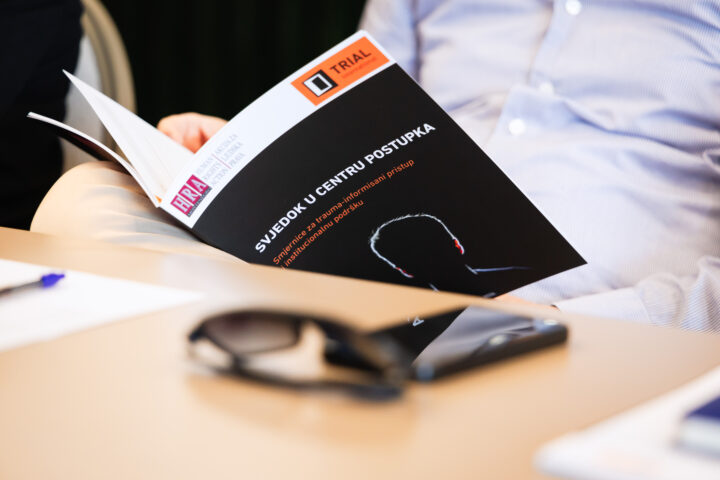
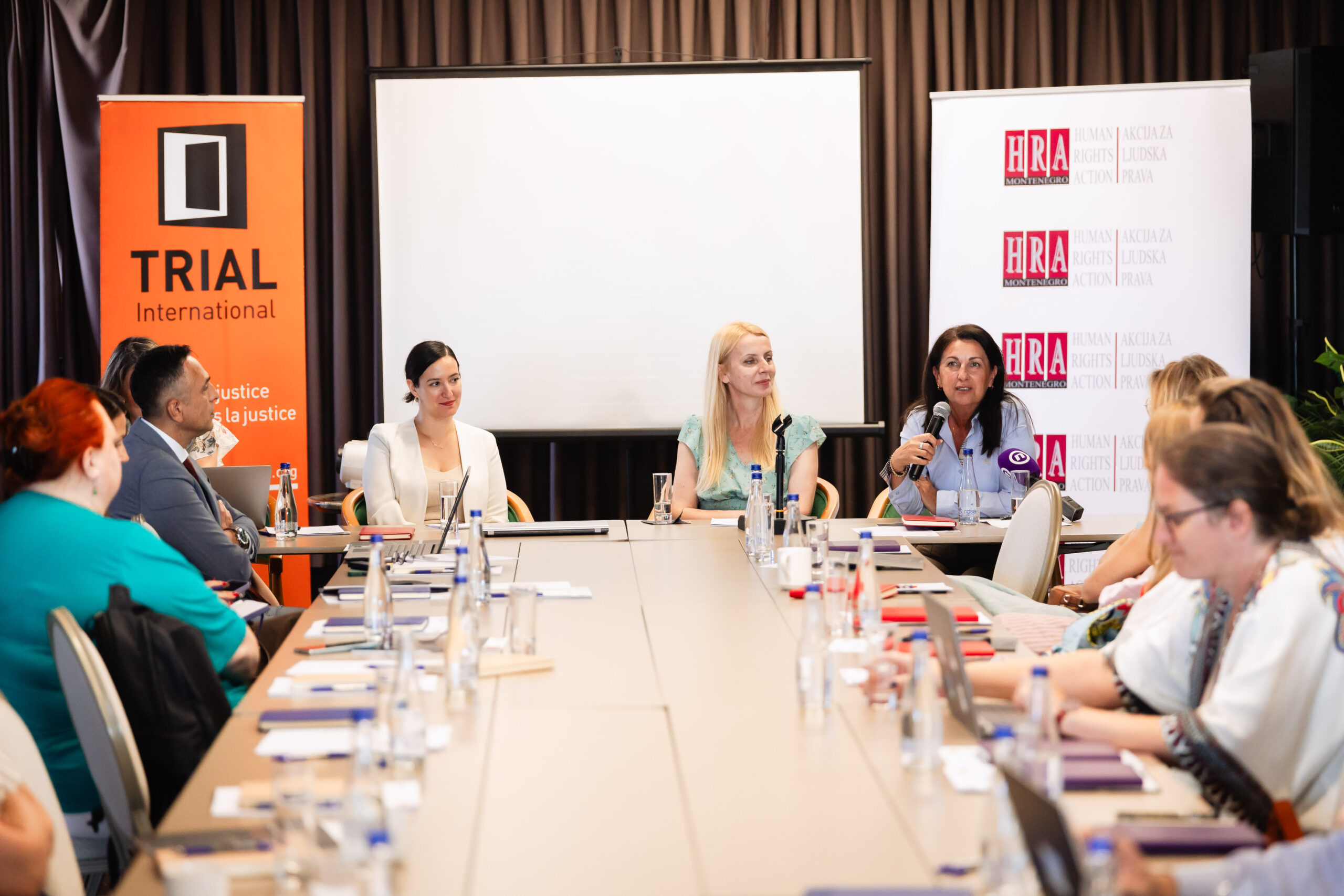
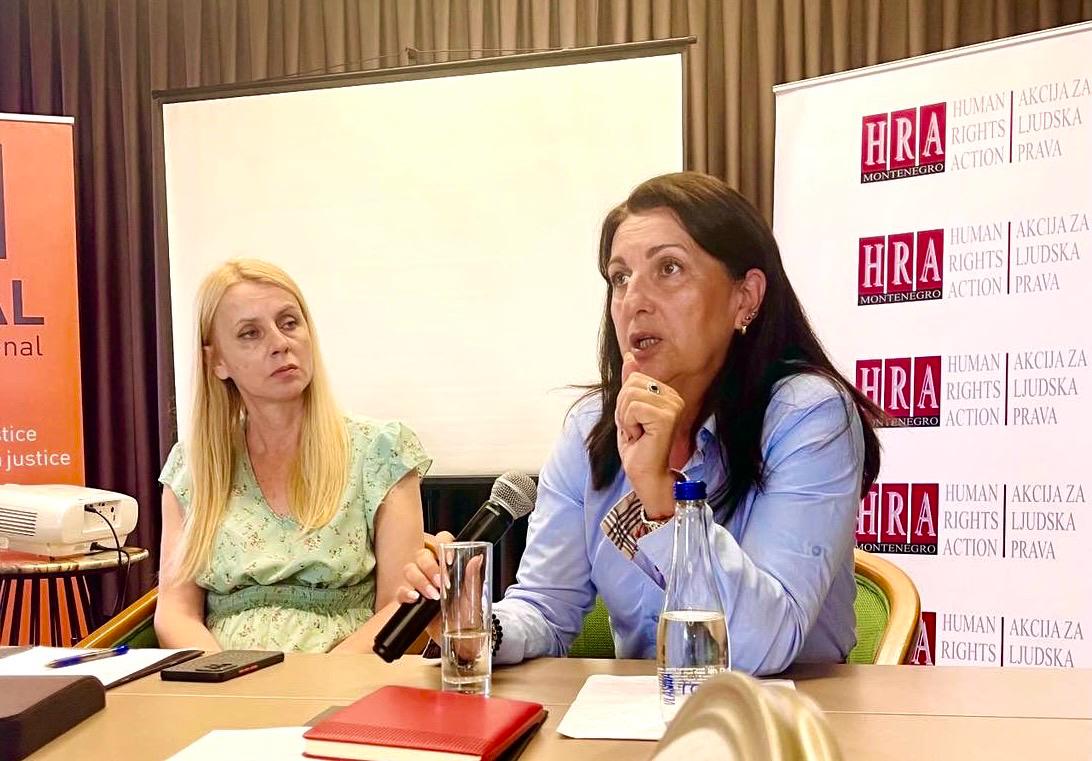
Montenegro must establish specialized services to support victims and witnesses in war crimes cases, provide adequate facilities and professional capacities, and draw on the experience of Bosnia and Herzegovina (BiH) in this field. This was the key message conveyed at the presentation of a manual on providing assistance, support, and protection to persons participating in war crimes proceedings.
The presentation was organized by the NGO Human Rights Action and TRIAL International – Office in Bosnia and Herzegovina, with financial support from the Kingdom of the Netherlands.
The manual outlines the key aspects of prosecuting war crimes, with particular emphasis on the position of victims and witnesses, the existing support mechanisms in Montenegro and Bosnia and Herzegovina, and the challenges encountered in practice. Special attention is devoted to regional cooperation between the two countries, which was assessed as essential for the effective prosecution of these criminal offences.
BiH Experience Demonstrates the Importance of Supporting Victims and Witnesses
HRA Executive Director Tea Gorjanc Prelević said that witnesses are among the most important and most frequently used sources of evidence in war crimes cases. For this reason, they must be motivated, encouraged, and properly prepared to provide clear and reliable testimony.
She warned that people who testify often carry extremely severe emotional consequences, which all participants in the proceedings must be aware of. She also highlighted the valuable experience of the Court of Bosnia and Herzegovina and its Witness Support Section. Over the past two decades, nearly 19,000 witnesses have received support through this service, approximately 16,000 of whom testified in war crimes cases.
Gorjanc Prelević recalled that amendments to Montenegro’s Criminal Procedure Code will, for the first time, provide for the establishment of support services for witnesses and injured parties within courts and prosecution offices.
However, participants at the event warned that the necessary staffing, professional, and spatial capacities required for these services to function effectively have not yet been secured.
Witnesses Remember How Institutions Treated Them
State Prosecutor at the Supreme State Prosecutor’s Office Armin Selmanović praised the manual, emphasizing that the prosecution of complex war crimes cases is inseparably linked to cross-border cooperation, particularly with the institutions of Bosnia and Herzegovina.
He warned of the risk of retraumatizing witnesses, stressing that people who participate in proceedings remember for a long time how institutions treated them.
Selmanović also noted that efforts are underway to improve the position of victims by enabling decisions on their compensation claims to be made within criminal proceedings, instead of referring them to additional and lengthy civil proceedings.
He particularly emphasized the importance of non-governmental organizations and specialized institutions, describing their role as invaluable in areas where the formal system has limited capacities.
Cooperation Between Institutions and Civil Society Is Essential
Zorica Jovović, an adviser at the High Court in Podgorica and the contact person for witnesses and victims in war crimes cases, said that although a specialized witness support service has not yet been established, certain protection mechanisms are already in place. She explained that efforts are being made to accommodate witnesses in separate rooms within the existing High Court building in Podgorica, even though the building does not have dedicated facilities for this purpose.
She emphasized that stronger institutional support is necessary for these mechanisms to become fully effective. She also highlighted the importance of cooperation with non-governmental organizations, whose experience and expertise provide valuable assistance to both institutions and individuals participating in proceedings.
According to Jovović, such support helps protect the dignity of witnesses and strengthens their trust in the justice system.
Every Witness Requires an Individual Approach
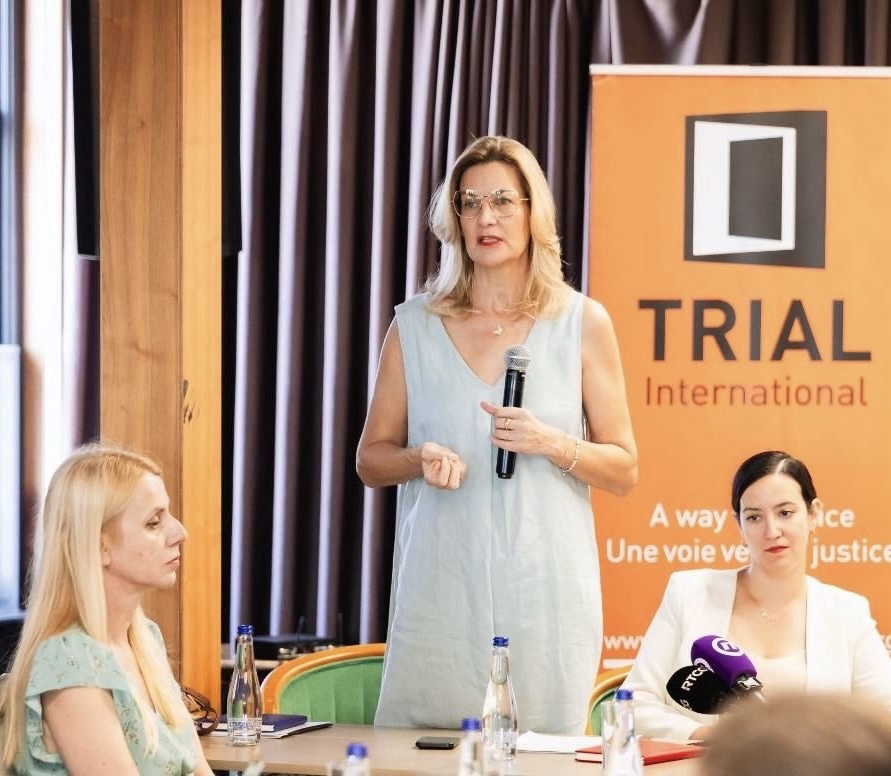
Berina Smajić, the author of the manual and Witness Support Coordinator at the Court of Bosnia and Herzegovina, said that establishing a high-quality support system requires not only clear procedures and professional capacities, but also an understanding of witnesses’ needs and empathy for their experiences.
She explained that each witness must be approached individually, as their needs, experiences, and psychological and physical condition differ. The role of the support service is not to influence the content of testimony, but to familiarize witnesses with the proceedings, explain what they can expect, and help them go through the entire process with as little additional stress and uncertainty as possible.
According to Smajić, witnesses often find it very meaningful when someone within an institution simply asks them, in a humane and caring manner, how they are feeling and whether they are able to bear the burden of testifying.
The witness support service in Bosnia and Herzegovina contacts witnesses after an indictment has been confirmed, prepares them for various situations that may arise during their arrival at and stay in court, monitors their condition, and, when necessary, accompanies them into the courtroom. Contact continues even after they have given their testimony.
Smajić also recommended establishing a witness database, which would enable better communication, more effective monitoring of their needs, and improved coordination between courts, prosecution offices, and professional support services.
She drew particular attention to the position of women who have survived sexual violence and who often have not spoken about their experiences for years, even to those closest to them. It is therefore important for witnesses to meet and prepare with the prosecutor before entering the courtroom, rather than for the first time at the trial itself.
Understanding Trauma Is a Prerequisite for Adequate Support and Fair Proceedings
Ana Jaredić, a co-author of the manual and a psychologist, emphasized that a witness should not be viewed merely as a source of evidence, but first and foremost as a person living with the consequences of a traumatic event.
She explained that trauma can affect the way a person remembers events, speaks about them, and reacts during questioning. As a result, testimony may not always be entirely chronological or expressed in exactly the same way on every occasion, while a witness may cry, pause, or find it difficult to speak about certain events.
“A person must be given time, listened to, treated with respect, and not rushed,” Jaredić said.
She stressed that a trauma-informed approach is necessary for all professionals who come into contact with victims, regardless of whether the case concerns war crimes, sexual violence, or gender-based violence.
Participants also highlighted the importance of organizing proceedings in a manner that does not place an additional burden on witnesses, since every renewed confrontation with a traumatic experience requires special preparation and support.
As an example of one of the most advanced trauma-informed approaches in the justice system, Jaredić referred to a case from Australia in which the court adapted the questioning procedure for a woman with dissociative identity disorder, formerly known as multiple personality disorder. As she explained, the court recognized the protective function of dissociation and distinct identities as a survival mechanism developed in response to extreme trauma, accepting that different identities may carry different segments of the traumatic experience and memories. By hearing testimony from six identities of the same person, the court was able to obtain a more complete picture of the events and gather additional relevant evidence, while at the same time respecting the psychological consequences of trauma.
According to Jaredić, this case demonstrates how important it is for the justice system to understand the effects of trauma and adapt proceedings to the individual, rather than expecting the person to conform to predetermined procedural patterns.
Building on the discussion of how trauma affects the way victims experience and remember events, Bojana Malović, Legal Adviser at the NGO Human Rights Action, noted that some victims of war crimes, while testifying in court, described the blood of murdered persons as yellow, even though they knew it was red. As she explained, this is one example of how extreme stress and trauma can affect perception and the way traumatic events are remembered. It is therefore essential for all participants in proceedings to understand the consequences of trauma and assess victims’ testimony within that context.
No Institution Can Act Alone
Samra Škulj, Legal Adviser at TRIAL International in Bosnia and Herzegovina, said that even after three decades, the country continues to face challenges in prosecuting war crimes.
According to her, Bosnia and Herzegovina’s experience has shown that no institution can respond to the needs of victims and witnesses on its own. Cooperation among the judiciary, non-governmental organizations, healthcare institutions, and other services is therefore essential.
Škulj particularly emphasized the importance of deciding compensation claims within criminal proceedings. As she noted, financial compensation cannot fully remedy the harm suffered, but it represents recognition that the perpetrator has not only been convicted, but is also required to bear responsibility for the damage caused.
Participants agreed that high-quality support requires professional teams, adequate facilities that ensure the protection of victims and witnesses—such as separate waiting rooms and entrances—continuous training for all participants in proceedings, and clear procedures designed to prevent contact between witnesses and defendants, as well as other situations that may cause additional trauma.
The main message of the manual’s presentation was that the effective prosecution of war crimes depends not only on the evidence collected and the quality of the indictment, but also on the ability of institutions to treat witnesses professionally, carefully, and with dignity. Witnesses must not simply be expected to “be strong”; institutions must create conditions in which they are not left to carry the burden of testifying alone.
The manual was prepared as part of a project implemented by TRIAL International in Bosnia and Herzegovina in cooperation with Human Rights Action from Montenegro, with financial support from the Kingdom of the Netherlands. The content of the manual does not necessarily reflect the views of the donor and is the sole responsibility of TRIAL International and Human Rights Action.











 English