NGOs ask the EU Delegation to monitor the legality of the election of RTCG Council members
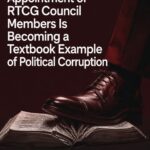
A group of NGOs today sent a request to the Head of the Delegation of the European Union to Montenegro, Ambassador Johann Sattler, asking the EU Delegation to appoint its representative as an observer of the process of electing four new members of the RTCG Council. The reason for this request is serious doubt about the legality of the procedure, including the acceptance of incomplete and disputed documentation of certain candidates who are clearly favorites of the ruling political parties.
Organizations working in the fields of human rights and media called on the EU Delegation, as well as relevant officials of EU institutions and other international organizations, to carefully monitor the implementation of the Law on RTCG and remind the parliamentary majority of its obligation to consistently respect the prescribed procedures. The involvement of an EU representative as an observer would serve as a guarantee of the transparency and legality of a process that is already raising serious public concerns and is of key importance for the independence of the public service broadcaster.
It was also pointed out that the public call for the election of four RTCG Council members was issued 45 days late, as well as concern that the Administrative Committee is trying to speed up the procedure in order to submit politically suitable candidates to Parliament for a vote without a thorough review of their documentation and fulfillment of legal requirements.
It is also indicative that opposition MPswere not allowed, at the session of the Administrative Committee held on June 4, to examine in detail the complete documentation of all candidates, even though it was precisely on the basis of that documentation that it was determined whether the candidacies met the legal requirements.
Based on only one day of searching the internet and available databases, serious shortcomings were identified in the documentation of Veselin Drljević, the candidate of NGOs from the media sector, and Amar Škrijelj, the candidate of NGOs from the field of human rights. In addition, some candidacies do not even contain basic information on the category of authorized nominators — that is, they do not state whether the candidates are being nominated by organizations from the media sector or from the field of human rights, which is a key element for assessing the legality of a candidacy.
The majority in the Administrative Committee has also demonstrated inconsistency in applying the criteria. Only a few months ago, the same majority annulled the process of electing members of the Council of the Agency for Audiovisual Media Services due to formal shortcomings in candidates’ documentation, while now it is ignoring the same or similar shortcomings in the case of its projected candidates.
The group of NGOs informed the EU Delegation, as well as other representatives of institutions monitoring these issues, that among the nominators of Veselin Drljević and Amar Škrijelj there are organizations that do not meet the legal requirements, including non-existent organizations, as well as those that are not active in the media field while nominating Drljević precisely in that field, have no publicly available data on relevant activities, or do not meet the financial criteria prescribed by the Law on RTCG. These facts confirm that the parliamentary service did not properly assess whether the candidates for RTCG Council members met the legal requirements and submitted valid documentation.
After one of the organizations — the NGO Society of Montenegrin Journalists — withdrew its support for candidate Veselin Drljević, the issue of the validity of the complete list of candidates was additionally raised, as was the need for the Administrative Committee to re-examine the documentation and adopt a new list of timely and complete proposals.
Therefore, we again call on the Administrative Committee, at its session scheduled for June 9, to allow all interested candidates and the public to inspect the relevant documentation, and we call on MPs from both the ruling majority and the opposition to actively participate in verifying the legality of the procedure before the election of RTCG Council members is completed.
Bearing in mind that the adoption of media laws was one of the key conditions for obtaining a positive IBAR, we expect EU institutions to devote full attention to this process and insist on respect for the principles of the rule of law, transparency, and independence of the public service broadcaster, because this is also a matter of their own credibility, which the parliamentary majority is treating irresponsibly.
Goran Đurović, Media Center Olivera Nikolić, Media Institute of Montenegro (MMI) Daliborka Uljarević, Centre for Civic Education (CCE) Milka Tadić Mijović, Centre for Investigative Journalism (CIN-CG) Tea Gorjanc Prelević, Human Rights Action (HRA) Darko Ivanović, NGO 35mm Zdravko Janjušević, Bijelo Polje Democratic Centre Nataša Nelević, NOVA – Centre for Feminist Culture Zorana Marković, Centre for Development of Non-Governmental Organizations (CRNVO) Nevenka Vuksanović, Centre for Democracy and Human Rights (CEDEM) Maja Raičević, Women’s Rights Centre Budislavka Mira Saveljić, Women’s Safe House Muamera Muslić, NGO Đakomo Adriatic Boris Nedović, NGO Centre of the North Marina Vujačić, Association of Youth with Disabilities of Montenegro (UMHCG) Nataša Međedović, SOS Hotline for Women and Children Victims of Violence Nikšić Radomir Kračković, Trade Union of Media of Montenegro Aida Perović, NGO Prima Ivana Vujović, Juventas





 English