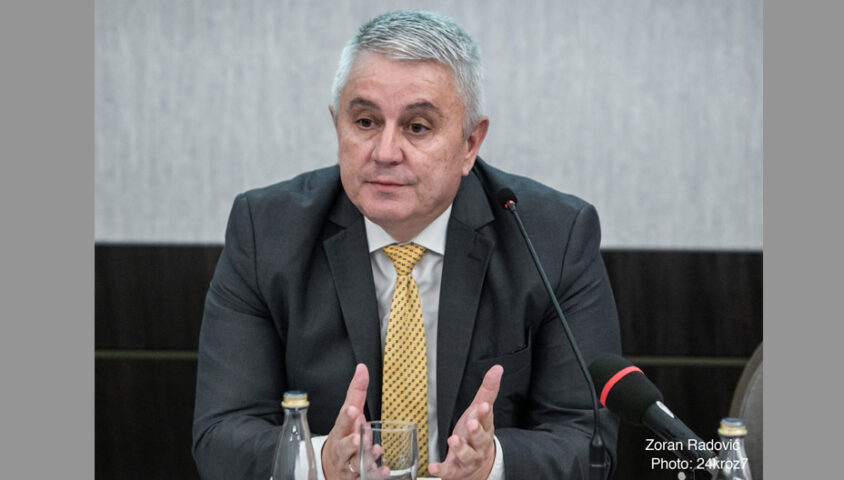
N18.T3 – Arguments For and Against the Parliamentary Hearing of Higher Court President Zoran Radović
HRA NEWSLETTER 18 – TOPIC 3
A joint session of the Committee on Security and Defence and the Committee on the Political System, Judiciary and Administration, held on 2 March in the Parliament of Montenegro, lasted nine hours. The session was convened as a control hearing into the escape of first-instance convict Miloš Medenica, son of convicted former Supreme Court President Vesna Medenica. Those present included Minister of the Interior Danilo Šaranović, Minister of Justice Bojan Božović, and Police Directorate Director Lazar Šćepanović — but not Higher Court President Zoran Radović, who had also received a summons from the Parliament.
Several days before the session, Radović informed the Parliament that he would not attend the control hearing, as doing so could undermine the autonomy and independence of the judiciary. It should be recalled that in October 2025, Supreme State Prosecutor Milorad Marković and Chief Special Prosecutor Vladimir Novović had likewise declined invitations to a control hearing before the Committee on the Political System, Judiciary and Administration.
The Higher Court in Podgorica had issued a public statement immediately after Medenica’s escape. In a response published on 29 January, it noted that following the imposition of supervisory measures on Miloš Medenica on 17 October 2025, responsibility had passed to the Police Directorate. The Court specified that under Article 168, paragraph 2 of the Code of Criminal Procedure, the police are obliged to enforce the imposed measure, and that, based on “a logical and purposive interpretation… the only possible conclusion is that it is the police’s obligation to prevent the defendant from fleeing his residence.” The Higher Court also informed the public that the case file contained “no correspondence — no Police Directorate reports on monitoring compliance with the imposed measure.”
The police, for their part, attempted in their statements to shift responsibility onto the Higher Court — on the grounds that the first-instance verdict had not been delivered within three years while Medenica was still in detention, and because the court had “at no point, through any act or correspondence, requested verification of the supervisory measure or a report from the Podgorica Security Department.”
Regardless, the refusal of Higher Court President Zoran Radović to attend the control hearing in the Parliament of Montenegro provoked a wide range of reactions. Particularly sharp was the response from Nikola Zirojević, Deputy Chair of the Committee on Security and Defence.
“Classic cowardice and flight from responsibility. And such behaviour, above all else, damages the image of the Montenegrin judiciary,” Zirojević wrote on platform X.
The Supreme Court came to the defence of the Higher Court President, arguing that there is no constitutional or statutory basis, nor any internationally recognised standard, that would justify the participation of a representative of the judiciary — whether an individual judge or a court president — in a control hearing.
“A judge cannot be held accountable for a legal opinion expressed or a vote cast in the course of reaching a judicial decision. In this context, parliamentary oversight mechanisms, including control hearings, are constitutionally limited to bodies and officeholders who are politically accountable to the Assembly. The judiciary is not subject to political accountability to the legislative or executive branch, but answers exclusively to the Constitution and the law, while verbal or institutional pressure from political actors on judicial bodies is incompatible with European standards of independence and the rule of law,” wrote Supreme Court President Valentina Pavličić in a letter addressed to the Parliament of Montenegro.
Attorney Dragan Prelević, founder of HRA, concurred with the head of the Montenegrin judiciary. He told Vijesti that there is no European country in which the hearing of judges would be permitted, and that the motivation behind the attack on the court was “clearly contrived” for day-to-day political purposes, designed to create “additional confusion around the case of the facilitated escape of a convicted person.”
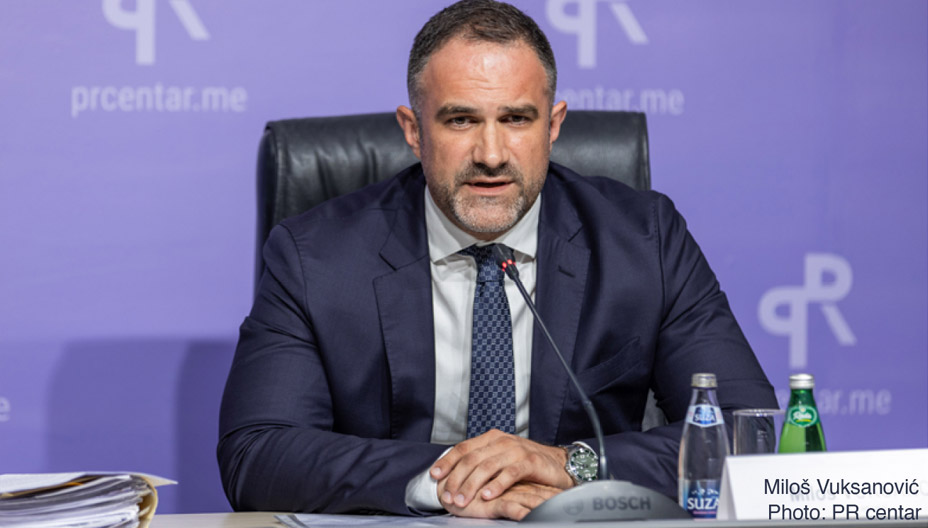
Attorney and former Prosecutorial Council member Miloš Vuksanović, on the other hand, considers the attendance of judicial officeholders at such hearings to be not merely advisable but obligatory — “in a situation where the entire system has turned against the judiciary and where judicial independence is at a historic low, if we can speak of a low at all,” he told Vijesti.
In the end, the nine-hour control hearing in the Parliament of Montenegro did not yield the expected results. It was dominated by criticism of the judiciary, whose representative was absent, while a substantive account of responsibility was nowhere to be found. Representatives of the executive branch and the Police Directorate Director pointed to imprecision in the legislative framework, particularly regarding supervisory measures. The session concluded without concrete findings, leaving questions of accountability unresolved and prompting announcements of further legislative intervention.








 English