Response to the Acting Police Director’s remarks before the Security and Defence Committee
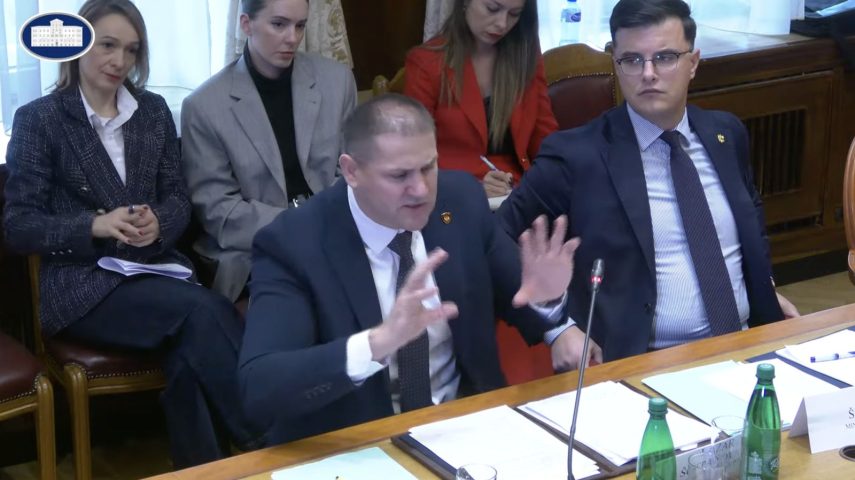
Human Rights Action (HRA) expresses its protest over the remarks made by Acting Director of the Police Administration Lazar Šćepanović at yesterday’s session of the Parliamentary Committee on Security and Defence, during which he inaccurately and out of context presented a conversation he had with a representative of our organization and attempted to discredit Human Rights Action, even linking our work with the “defense of criminals.”
HRA consistently advocates that the proposed amendments to the Law on Internal Affairs be aligned with European standards, so that the existence of so-called “security impediments” is determined through a fair and transparent disciplinary procedure against police officers. In contrast, the current government proposal moves toward abolishing such a procedure.
Contrary to HRA’s position, the Acting Director of the Police Administration stated at the same session (as can also be heard in the recording) that the amendments are already fully aligned with European standards, and argued for their urgent adoption without waiting for the opinion of the European Commission. Yet that opinion is crucial for assessing compliance with the EU acquis, verifying legality, and safeguarding human rights — and ignoring it does not contribute to trust in the legislative process.
HRA particularly stresses that Mr. Šćepanović inaccurately and out of context presented the content of the meeting he held three and a half months ago (13 September 2025) with our Executive Director, Tea Gorjanc Prelević, and the Executive Director of the Women’s Rights Center, Maja Raičević. The topic of that meeting was not the Law on Internal Affairs but the security situation in Cetinje. The public has already been informed about what was discussed at that meeting through statements issued by both sides.
Belittling interlocutors and continuously attempting to personally discredit representatives of civil society does not contribute to democratic culture or to the accountability of institutions such as the police.
We expect a correct, evidence-based, and respectful dialogue with civil society — especially when discussing issues that directly affect human rights, the integrity of the police, and Montenegro’s accession to the European Union.
We particularly expect that the opinions of the European Commission will not be ignored before the adoption of laws that significantly affect human rights.







 English