N14.T1 – Jovanović Appointed to the Constitutional Court; Vučinić and Radović Did Not Receive the Required Support
HRA NEWSLETTER 14 – TOPIC 1
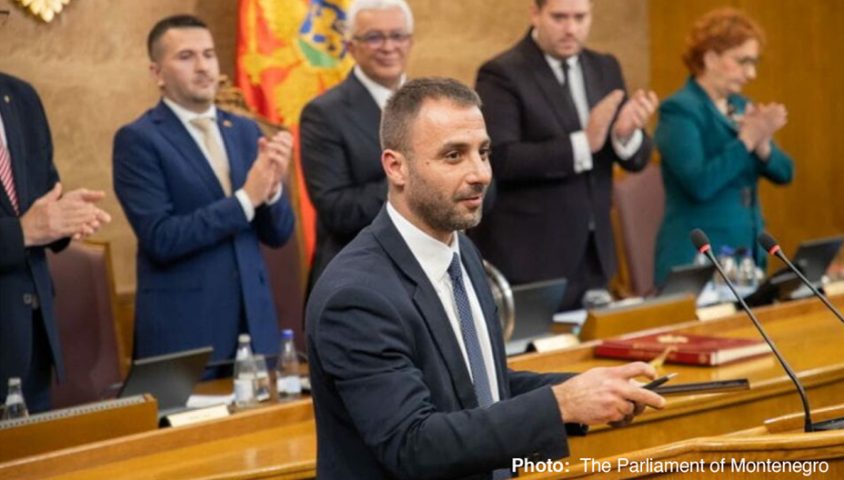
At its session held on 25 November, the Parliament of Montenegro appointed Jovan Jovanović as a judge of the Constitutional Court. The other two female candidates, Mirjana Vučinić and Mirjana Radović, did not receive the necessary support.
Jovan Jovanović, a judge of the Higher Court in Podgorica, received 50 votes. Mirjana Radović, the Deputy Ombudsperson, received 47, and attorney Vučinić 45 votes. Since none of them received a two-thirds majority in October, the second round required a three-fifths majority, or at least 49 votes, for election.
Before the vote, opposition MPs warned President of Parliament Andrija Mandić that the voting should follow the previously established order, since Vučinić’s candidacy was submitted to Parliament five months prior to that of Jovanović and Radović.
“Please, do not allow trading, inter-party arrangements, or internal and external pressure to alter the voting schedule and disrupt the work of Parliament,” stated Boris Mugoša of the Social Democrats.
Nevertheless, Mandić rejected the proposal, so MPs voted first on Jovanović and Radović, and only then on Vučinić.
Human Rights Action welcomed the election of Jovanović that same evening but also expressed regret over the failure to elect the other two candidates.
“At this historically important moment in Montenegro’s EU accession process, Parliament failed to demonstrate the necessary level of responsibility regarding appointments to the Constitutional Court, an institution that constitutes the final safeguard of the rule of law. The court will still be unable to function in full composition, which will seriously impair its efficiency. We remind that the court currently has 2,135 pending cases, of which 1,797 are constitutional complaints, and the existing four judges were able to resolve only those cases on which they reached consensus,” HRA stated.
President Jakov Milatović, whose nominee Mirjana Vučinić was not elected, said that citizens expected accountability from all MPs regarding the candidates and their professional records.
“The election of one judge today is only a partial step forward. The court remains incomplete and cannot fulfill its constitutional role in full capacity. We must not allow the country to stagnate due to political maneuvering and irresponsibility. It is time to finish the job,” the President said.
Still, the question remains how soon the process can be concluded. HRA notes that the President’s nominee is unlikely to be elected before year’s end, and that new nominations by the Constitutional Committee cannot be expected before March or April of the following year.
“In its latest report, the European Commission stressed that Montenegro must ensure the effective functioning of the Constitutional Court, which is not possible without all seven judges. This situation not only undermines the protection of constitutionality and human rights, but also jeopardizes Montenegro’s progress towards EU membership,” HRA warned.
The Head of the EU Delegation to Montenegro, Johan Sattler, expressed regret the next day over another “missed opportunity at a crucial moment for Montenegro,” and recalled that the latest EC Progress Report emphasized the need to fill vacancies on the Constitutional Court.
“What we expected was for all political actors to cooperate—despite political differences—in order to find a joint solution, which did not happen. To move forward, we expect this situation to be resolved,” said Sattler.
Judge Desanka Lopičić’s twelve-year term at the Constitutional Court expires at the end of December, but according to Court President Snežana Armenko, Lopičić will remain in office until a new judge is appointed. Pursuant to Article 15 of the Constitution, when a judge’s term expires and the nominating party fails to propose a replacement or Parliament fails to elect one, the Assembly shall simultaneously issue a decision to terminate the outgoing judge’s function and a decision for that judge to continue serving until a new one is elected, “but not for more than one year.”
However, Judge Lopičić’s term should have ended last year under the Constitution, when she met the requirements for retirement pursuant to the Law on Pension and Disability Insurance (LPDI). While Judge Dragana Đuranović’s term expired in December 2024 in accordance with the Constitution and LPDI, Lopičić could remain in office even beyond the constitutionally questionable additional year, which should be unacceptable in a state committed to the rule of law.









 English