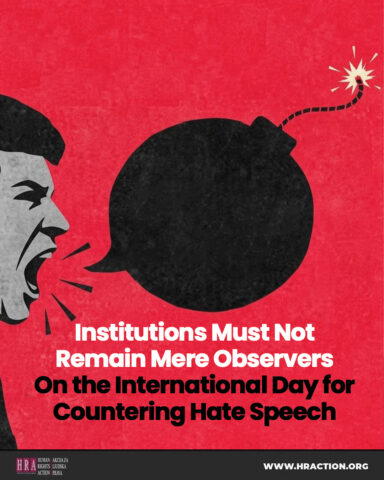
Institutions Must Not Remain Mere Observers – On the International Day for Countering Hate Speech
Hate speech remains widespread in Montenegro’s public and online space, without a consistent response from institutions. The European Commission and the European Parliament have repeatedly raised concerns about this issue, expecting change above all through the responsible conduct of public officials.
Public officials and religious leaders bear particular responsibility. Instead of promoting tolerance and coexistence, some of them fuel divisions or remain silent in the face of them. At religious gatherings, Chetnik commanders responsible for mass crimes continue to be glorified, while some television programmes spread disinformation and messages of hatred towards LGBTIQ people, women, and the Montenegrin nation.
However, several recent cases show that institutions can respond effectively when they recognize that hate speech may encourage discrimination, violence, or interethnic tensions. The Mayor of Nikšić, Marko Kovačević, was sanctioned for hate speech that amounted to war-mongering propaganda, while the Mayor of Pljevlja, Dario Vraneš, was sanctioned for misogynistic remarks.
The police prohibited a concert by Baja Mali Knindža in Pljevlja after assessing that it could threaten public order and the rights of minority communities.
Judicial and regulatory bodies have also taken action. The Council of the Agency for Audiovisual Media Services temporarily restricted the rebroadcasting of Informer TV because it aired content insulting the citizens of Cetinje, denying Montenegrin independence and national identity, and promoting revisionist narratives. Last year, the Council also fined Adria TV for broadcasting the film “Srebrenica – Anatomy of a Deception”. Today, the Higher State Prosecutor’s Office in Podgorica initiated misdemeanour proceedings on suspicion of a violation of the Law on the Prohibition of Discrimination.
The Higher State Prosecutor’s Office in Podgorica also opened cases on its own initiative following chants of Ratko Mladić’s name at a basketball game in Zeta and, in October 2025, following chants such as “Turks, move away”, “Turks out”, and “Kill a Turk”. These cases show that the authorities can act even without a formal complaint or public pressure.
However, in some cases the authorities failed to take measures that were within their powers. We believe that, at the gathering following the protest in Zabjelo where hateful messages were directed at Turkish citizens, the police should have warned participants that such speech was prohibited and should have stopped the gathering when the behaviour continued.
These examples show that an effective institutional response is possible—the question is whether it will become the rule rather than the exception. The European Parliament highlighted this issue in its latest resolution, calling on Montenegro to strengthen its institutional response to hate speech, ensure effective investigations and prosecution of those responsible, and expressing concern about the inadequate response to public statements glorifying war criminals and revising historical facts. The Parliament also warned about political revisionism that deepens social divisions and undermines the process of reconciliation.
A society that normalises hatred and allows it to go unpunished gradually accepts discrimination as the norm and creates conditions for violence. Institutions must not remain silent observers. They must consistently, promptly, and equally protect the dignity and rights of all citizens, regardless of the circumstances or public pressure.







 English